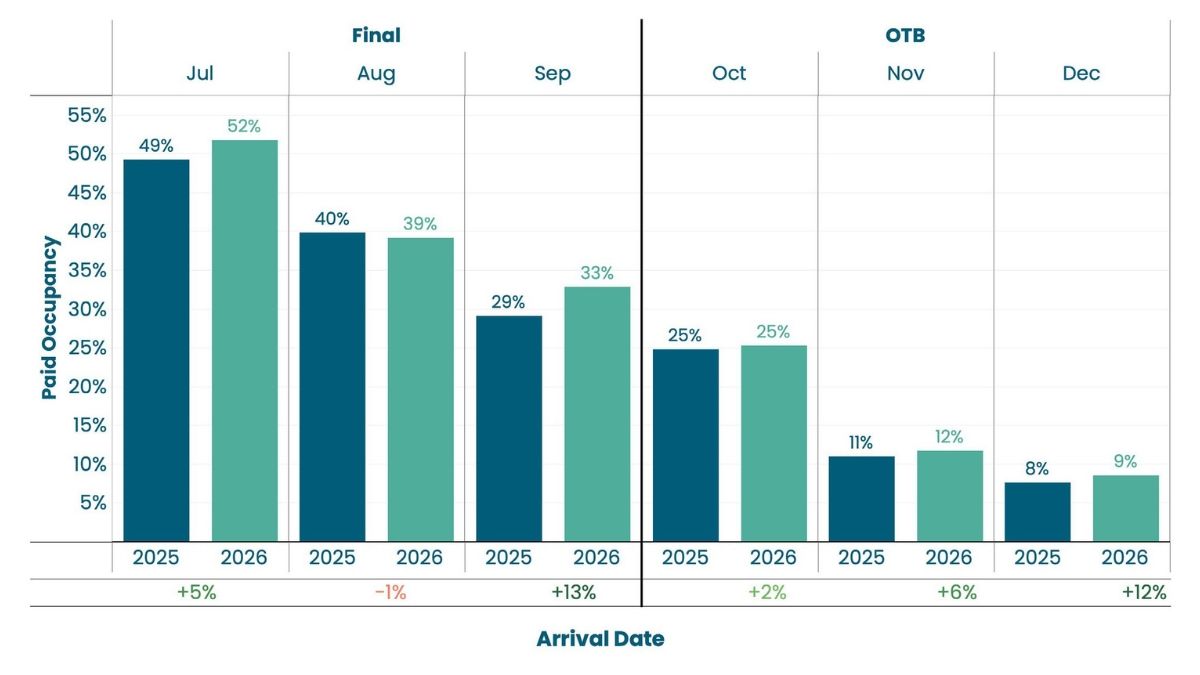
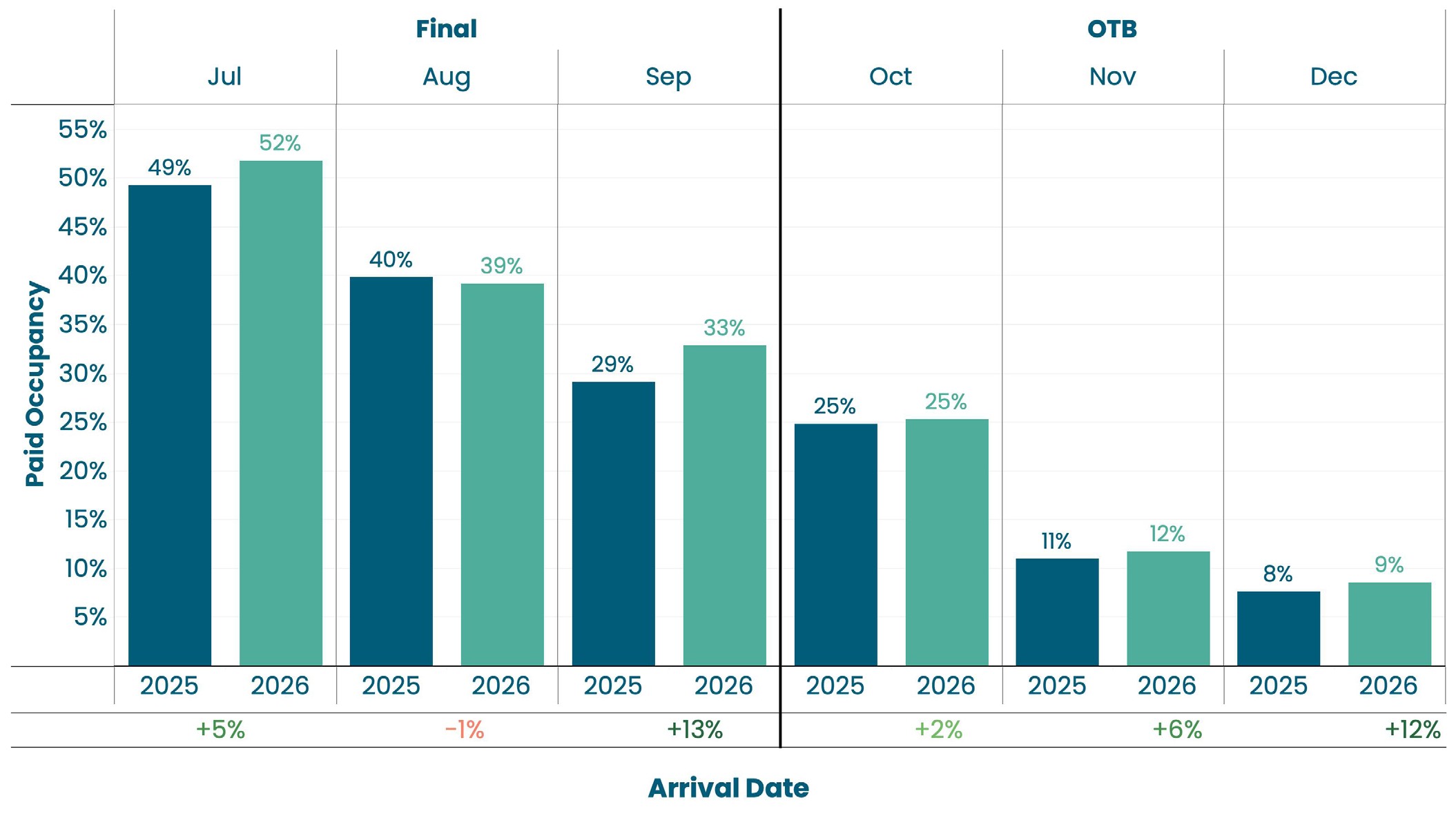
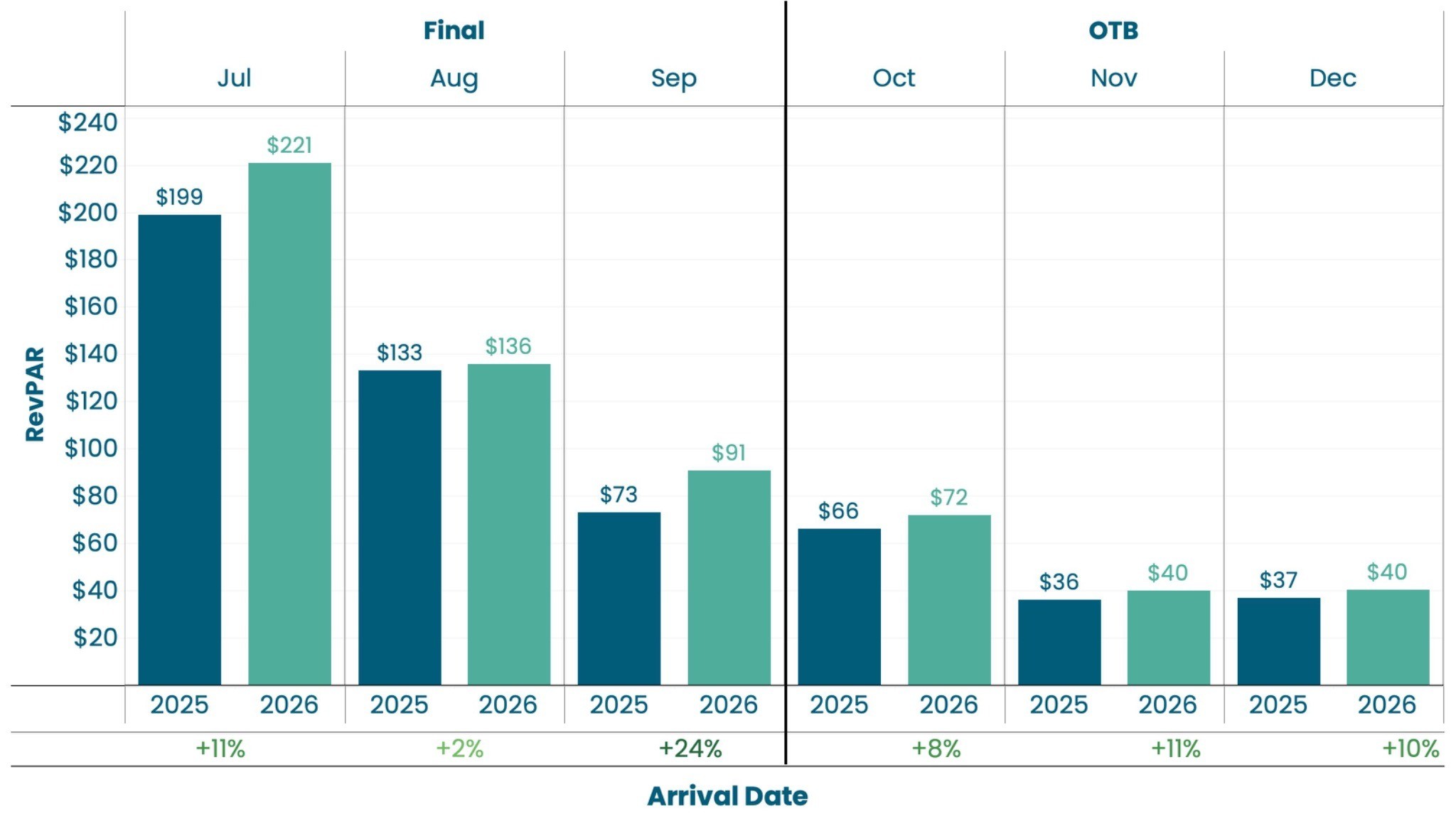
U.S. short-term rental revenue is pacing ahead of last year for every remaining month of 2026, according to KeyData’s Q4 US Index. As of October 4th, on-the-books RevPAR was up 8% for October, 11% for November and 10% for December.
Occupancy is driving most of the gains. December occupancy is pacing 12% ahead, while December rates are pacing 2% behind, at $473 compared with $481. KeyData describes that as a shift from the mostly rate-led growth of earlier this year, which its summer data also showed.
The Holiday Calendar Is Still Early
Those percentages sit on small numbers. As of October 4th, 9% of December nights were booked, compared with 8% a year earlier. November stood at 12% against 11%, and December RevPAR at $40 against $37. October was 25% booked, in line with last year.
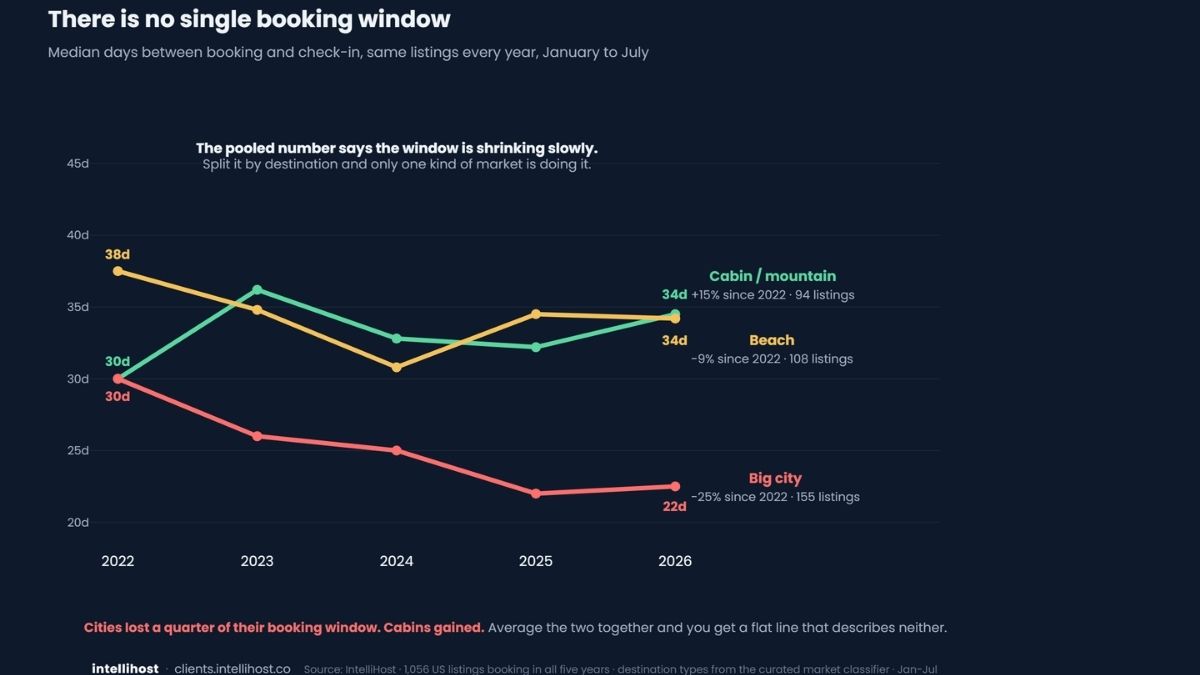
Guests are booking slightly further ahead than last year, with December’s average booking window at 152 days. December stays are pacing 4% shorter, at 6.3 nights. KeyData’s Sally Henry said operators should hold rates on high-demand dates and adjust where booking pace trails the local market.
September Finished Close to the Summer Forecast
Finalized Q3 data showed RevPAR up 11% in July, 2% in August and 24% in September, when it reached $91. September occupancy rose 13% and ADR rose 10% to $276. In July, KeyData’s data had September pacing 13% ahead on occupancy and 11% on rate.
August occupancy slipped 1%. Labor Day weekend fell mostly in August last year (August 30 to September 1) and entirely in September this year (September 5 to 7).
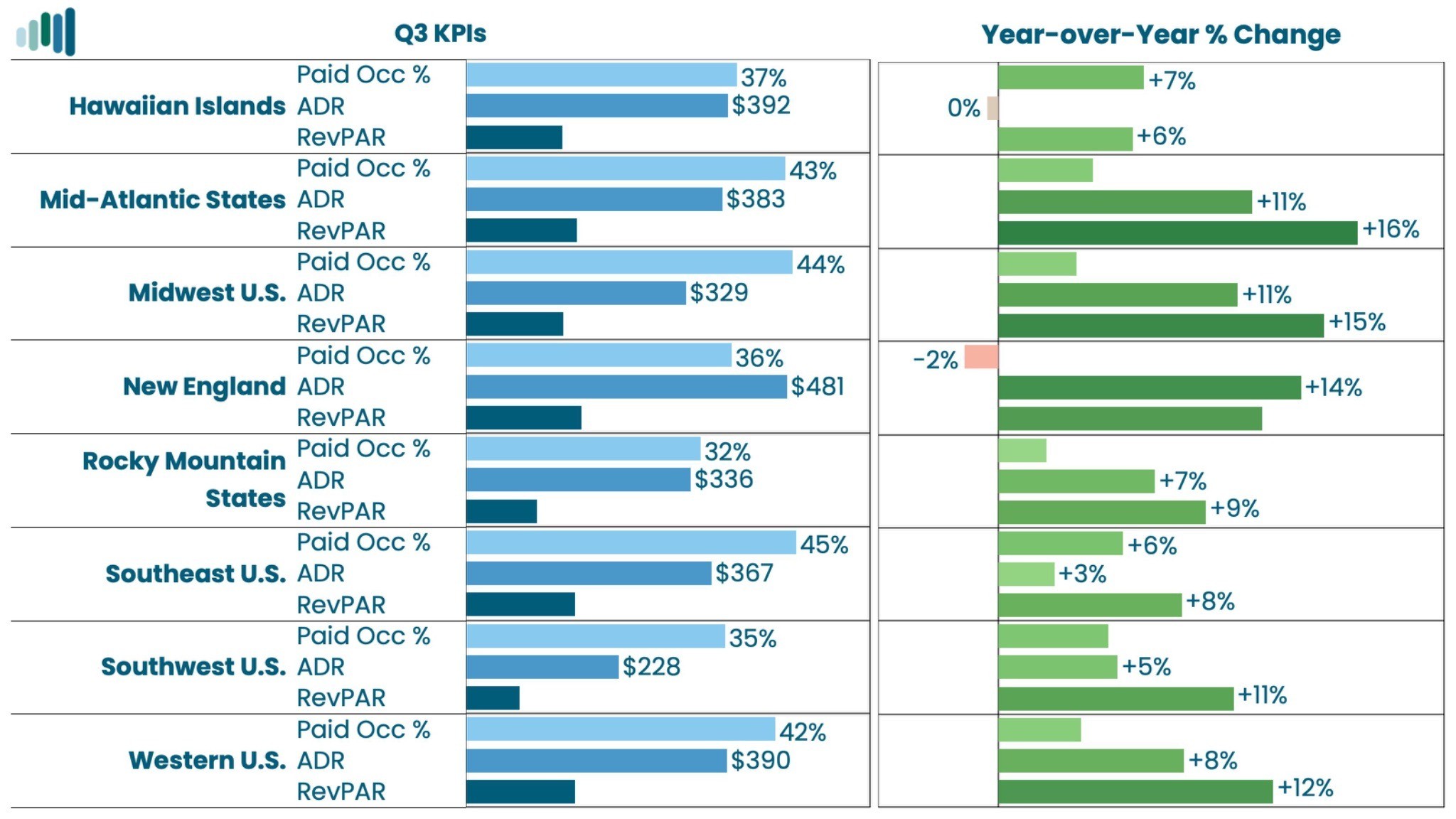
RevPAR rose in every region, from 6% in the Hawaiian Islands to 16% in the Mid-Atlantic. Short-term rental RevPAR also grew faster than hotel RevPAR in all seven regions where KeyData had hotel data, with the widest gap in the Mid-Atlantic at 16% against 5%. New England’s growth came from rate, with ADR up 14% offsetting a 2% dip in occupancy.
Direct Bookings Lost More Ground
Airbnb accounted for 47% of Q3 reservations, unchanged from a year ago and up from 42% in 2024. Its share of revenue rose from 34% to 35%.
Direct bookings fell to 26% of reservations and 38% of revenue, from 27% and 40% in Q3 2025. Vrbo held at 20% of reservations and 23% of revenue. Booking.com rose from 6% to 7% of reservations and from 3% to 4% of revenue.

The shift matches what KeyData’s spring report showed, when Airbnb reached half of U.S. reservations. Direct bookings still bring in a larger share of revenue than of reservations.