Late summer is booking up faster than it did last year. KeyData's newest U.S. report shows nightly rates up year over year in every month on its chart, with September being furthest ahead at 11%.
A year ago the same report read very differently. In August 2025 we reported that September was running 10% behind on RevPAR, and late summer looked soft. This year it’s pacing ahead, and the gains are coming from higher nightly rates rather than from filling more nights.
Rates are driving growth in almost every region
Seven of the eight U.S. regions KeyData tracks raised rates in the second quarter.
The Mid-Atlantic did not fill any more nights than last year, and it still grew RevPAR 12%. All of that came from a 12% rate increase. The Midwest and New England each lost a point of occupancy, and both still grew RevPAR 10% on rate gains of 11%. The Western U.S. led the country at 13%.
Hawaii did the opposite. Rates there fell 1% while occupancy rose 9%, and RevPAR still went up 7%. That growth came from volume, not from price.

June looked much the same across the 13 World Cup host cities, where revenue rose almost entirely on what hosts charged per night.
51% of reservations are happening through Airbnb
Airbnb took 51% of U.S. reservations and 43% of revenue in the second quarter, up from 47% and 36% a year ago. Direct bookings fell to 21% of reservations and 29% of revenue, down from 25% and 36%. Vrbo held steady at 20% and 23%. Booking.com stayed small at 7% and 5%.
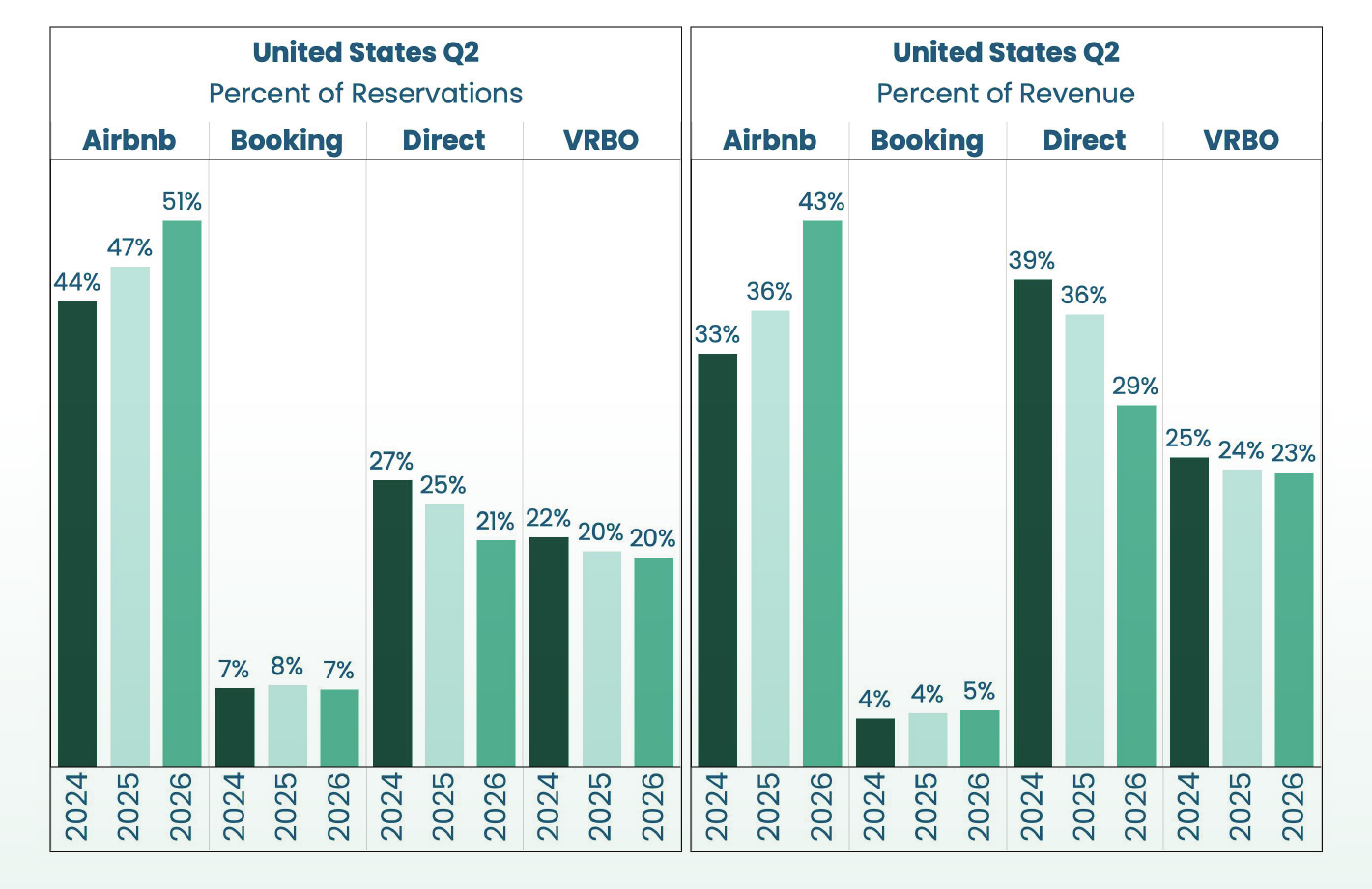
Direct bookings still earn more per stay. They’re 1/5 of all bookings but almost 1/3 of all revenue, which means longer stays at higher rates.
What the data shows about pricing
Guests are still booking, and they’re still paying more than they did last year. What changed is that more listings are chasing them, so revenue is growing on price and not on nights sold.
Occupancy rose in April, May and June. The rate increases came alongside more nights sold, and nothing in the quarter points to demand falling away.
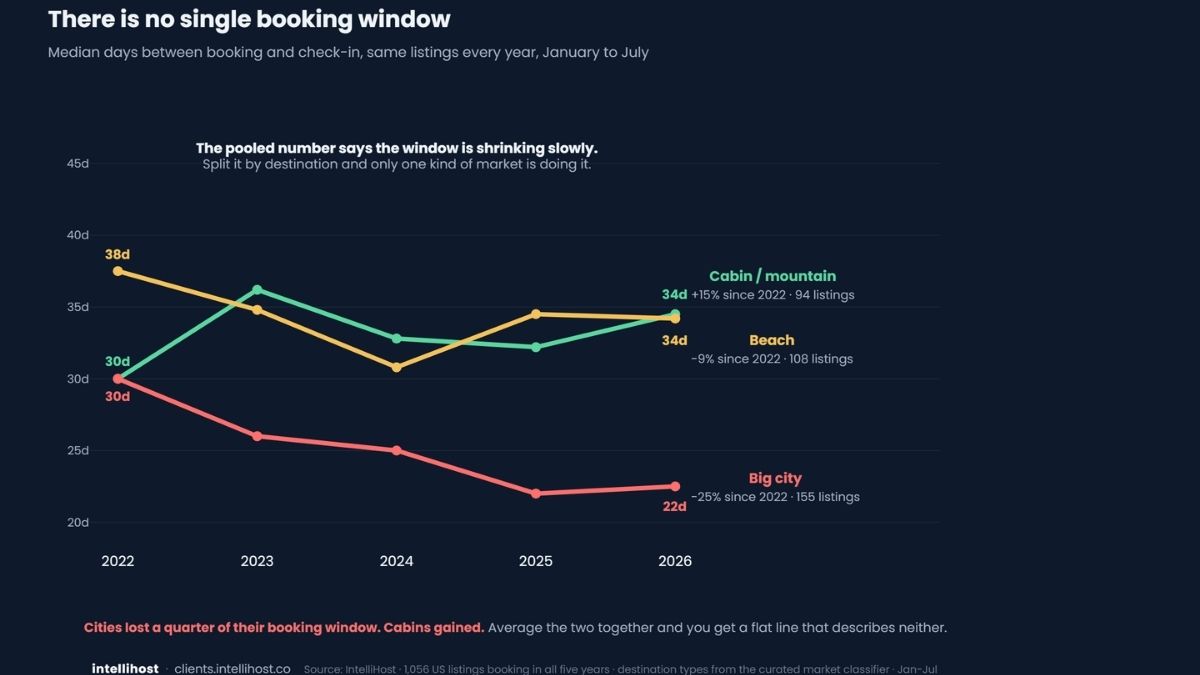
September's calendar looks thin at 13% booked, but it was thinner still at this date last year. Key Data notes that booking windows remain open and expects occupancy to keep building as arrival dates approach.

.webp)