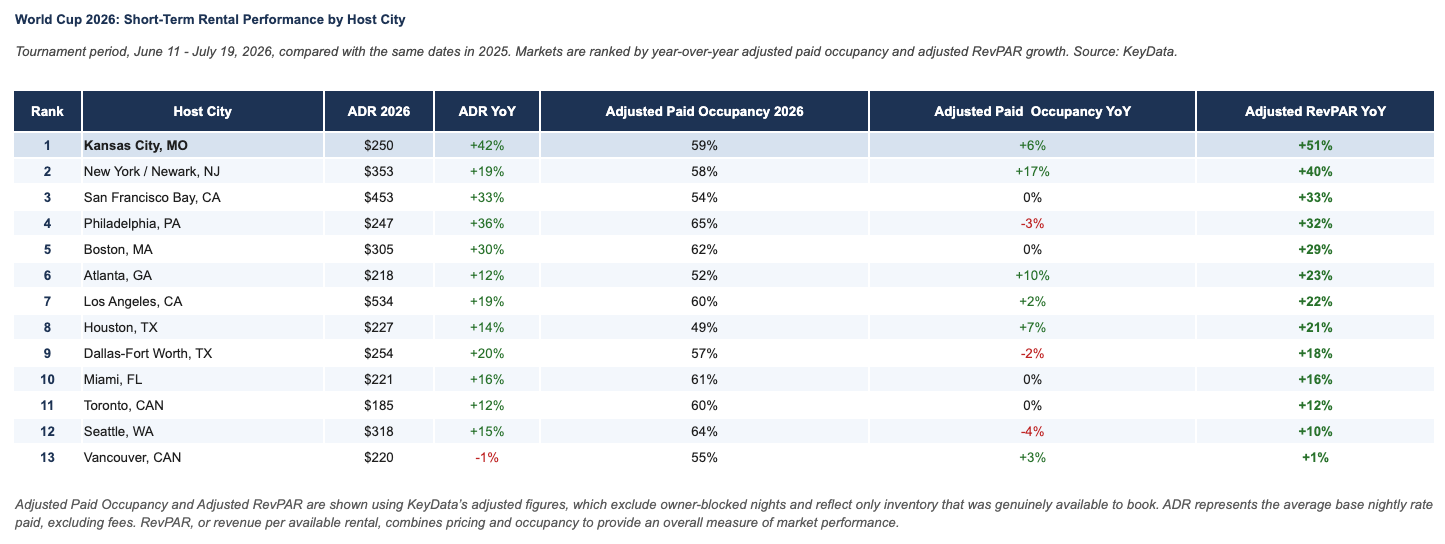
Short-term rental revenue climbed across nearly every 2026 FIFA World Cup host city during the tournament, according to new analysis from KeyData. Adjusted revenue per available rental (RevPAR) rose about 24% year over year across the 13 US and Canadian host markets during the tournament window, compared with the same dates in 2025.
For hosts, the more useful number is where that growth came from. Average daily rates rose around 20%, while adjusted paid occupancy (the share of available nights actually booked) increased only about 3%. So operators earned more by charging more, not by filling more of the calendar.
Where the Rate Gains Were Biggest
Kansas City was the clear standout, and the only market to post meaningful gains on both levers: ADR up 42% and occupancy up 6%, for RevPAR growth of 51%. New York/Newark followed at 40%, carried by the largest occupancy jump of any city, up 17%. San Francisco Bay ranked third at 33%, almost entirely on price, with occupancy flat. Philadelphia, Boston, and San Francisco all cleared 29% growth on rate alone.
Being a host city didn't guarantee a windfall. Vancouver finished last, essentially flat at 1%, with nightly rates down slightly; its modest gains came from guests staying longer rather than paying more. Seattle rose just 10% even as occupancy fell 4%, and Philadelphia, Dallas, and Seattle all booked fewer of their available nights than a year earlier.
Stays got shorter almost everywhere, down about 3% on average and more sharply in Miami (14%), New York/Newark (13%), and Philadelphia (11%). This exemplifies the focused, match-driven trips we flagged when early bookings surged but stays got shorter.
The Takeaway
The tournament rewarded pricing, not just location. Sally Henry, KeyData's VP of market intelligence, framed the result as a playbook for the run of major events heading to North America: the operators who read demand early and held their rates came out ahead, while occupancy alone doesn’t win.
For hosts, the takeaway is that the gains came from real demand meeting higher prices, not from discounting to chase unbooked nights.

.webp)
.jpg)