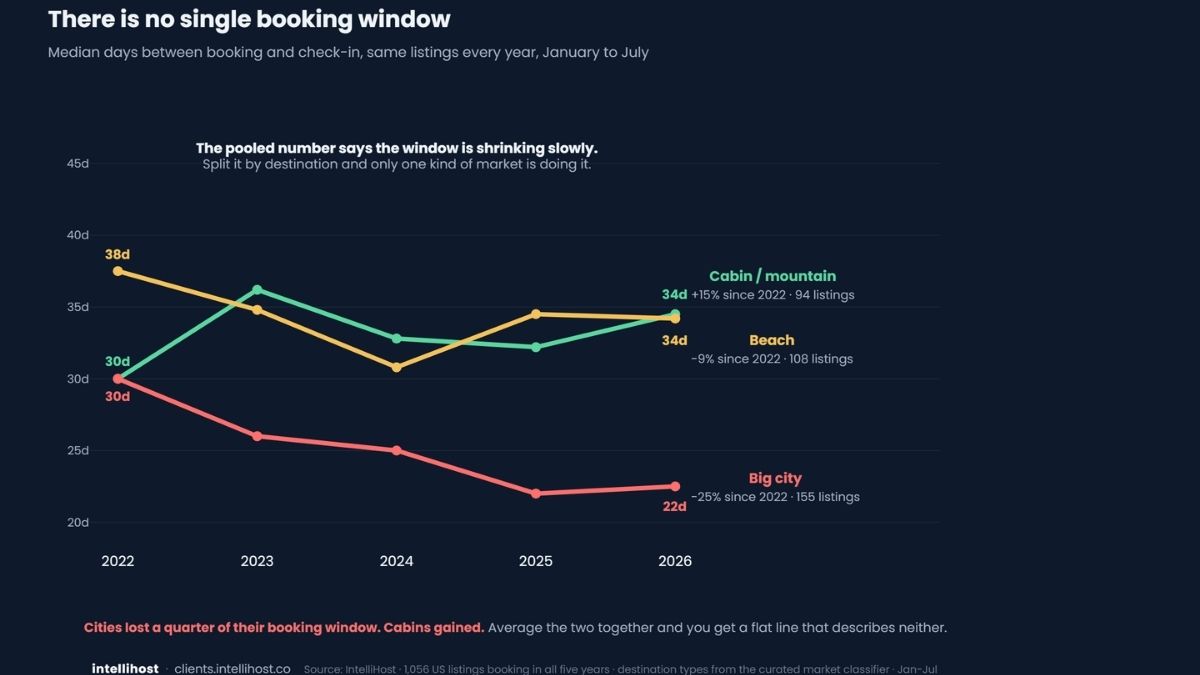
The new 2026 Short-Term Rental Outlook Report from PriceLabs & Rentals United shows the average length of stay in the U.S. vacation rental market grew nearly 10% in 2025, climbing from 4.0 nights to 4.42 nights. Over the same period, the average booking window shrank 3% to 22.3 days.
U.S. active listings reached 1.6 million by December 2025, up from roughly 1.46 million a year earlier, and PriceLabs-tracked average occupancy slipped from 53% in 2024 to 51% in 2025.
Dynamic Pricing Gap
PriceLabs broke out U.S. occupancy by pricing-tool adoption. Properties on "high" dynamic pricing averaged 57% occupancy in 2025, compared to 44% for static-rate listings, a 13 percentage-point improvement. The gap was wider in other markets: 30 points in Italy, 29 in Portugal and Mexico, and 18 in Australia. The data complements earlier PriceLabs work showing listing content rather than headline price often separates top performers from underperformers.
Luxury Boom
Luxury apartment bookings on Rentals United grew 119% in 2025, from 9,724 to 21,354 bookings. Total booking value in the segment climbed from €12.5 million to €33.8 million. The report projects 40% revenue growth in luxury through the end of 2026, alongside Airbnb's reported 30% year-over-year increase in luxury demand and Homes & Villas by Marriott Bonvoy's 25% projected booking growth.
Channel Diversification
Rentals United platform data showed bookings growth across nearly every major OTA in 2025. Booking.com bookings grew 48.7%, Airbnb 48.9%, and Expedia 53.5%. Niche channels grew faster off smaller bases, with HomeToGo bookings climbing 187% and Plum Guide rising 40%.
That broad-based picture sits in the same ballpark as other recent data. Key Data figures showed Airbnb crossing 50% of U.S. reservations in Q2 2026 as direct bookings slid to 23%. AirDNA data cited in earlier Host Report coverage showed 48% of U.S. listings live on a single channel and 64% of Airbnb hosts operate without a PMS, consistent with this report’s push for hosts to grow into multiple channels for distribution.
Where 2026 Outlooks Agree and Disagree
Beyond's 2025 industry report, covered at the end of last year, reported 53.1% U.S. occupancy in 2025, a 3% lift year over year, with an average U.S. length of stay of 5.7 nights and a 26.8-day lead time. PriceLabs reports lower absolute occupancy and shorter average stays, but both datasets converge on the same direction of travel: stays are lengthening and travelers are booking closer to arrival than they did a year ago.
Across both reports, dynamic-pricing adopters continued to pull ahead of static-rate operators on occupancy. Supply on the U.S. side grew through 2025 while individual property occupancy ticked down.

.webp)
.jpg)