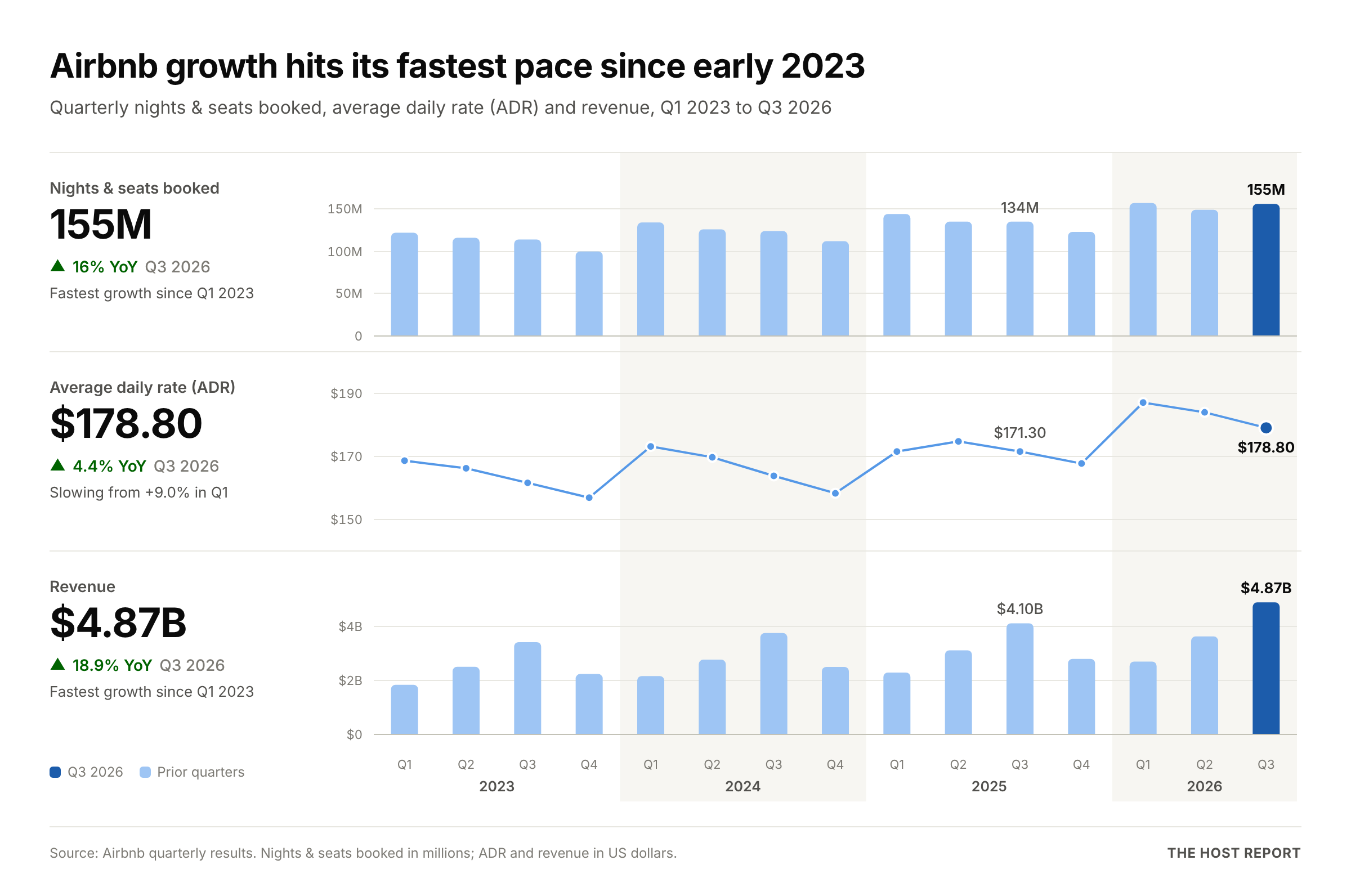
Airbnb reported its fastest growth in more than three years in Q3 of 2026. Revenue rose 18.9% year over year to $4.87 billion, and nights and seats booked grew 16% to 155 million. Both were the company’s strongest growth rates since early 2023.
The earnings call also covered several changes that affect hosts directly. Cancellations tied to Reserve Now, Pay Later are rising, the impact of AI travel agents, the development of sponsored listings, and CFO Ellie Mertz explained what the 15.5% host-only fee means for Airbnb’s revenue.
Most of the Growth Came From More Nights Booked
Q3 was Airbnb’s biggest revenue quarter since 2023, and the growth rates stood out.
Revenue climbed to $4.87 billion, up from $4.10 billion a year ago. Revenue growth has held steady all year, at 18% in Q1 and 17% in Q2.
Bookings are where things picked up. Nights and seats booked reached 155 million, up from 134 million in Q3 2025. That 16% growth is a big step up from earlier this year, when nights and seats grew 9% in Q1 and 10% in Q2.
Average daily rate (ADR) rose 4.4% to $178.80. Rates are still going up, but more slowly. ADR grew 9.0% year over year in Q1.
Put together, most of Airbnb’s growth this quarter came from booking more nights, not from charging more per night.
1. Reserve Now, Pay Later Is Lifting Bookings and Cancellations
Reserve Now, Pay Later (RNPL) lets guests book eligible stays with $0 upfront and pay closer to check-in. Airbnb said the feature added about 3% to nights and seats growth this quarter. Without it, growth would have been about 13%.
However, cancellations are rising along with it. In February, Mertz said RNPL had pushed Airbnb’s overall cancellation rate up about 1%, from roughly 16% to 17%, and called the change “not hugely material.” On this call, she said the cancellation rate is now about 19%, up 2-3% from a year ago. She described that level as “very healthy.”
Mertz also said Q3 was “the peak in terms of net impact of RNPL.” Bookings show up first and cancellations follow later, so Airbnb expects the net boost to nights booked to shrink in Q4.
For hosts, a higher cancellation rate means more booked nights can open back up closer to the stay date, when they are harder to fill.
2. Chesky Pushes Back on AI Travel Agents
Airbnb’s CEO Brian Chesky brought up the threat of AI agents four times during the call. Twice he raised it on his own, including in his opening remarks.
His argument was that general AI agents work well for simple tasks, but travel is complex enough that specialists like Airbnb will win.
The topic has been on investors’ minds since September, when Airbnb, Expedia and Booking Holdings stocks fell sharply in a single day after Meta launched Muse, an AI agent built to book travel. The concern is that an AI agent could compare the same property across Airbnb, Vrbo, Booking.com and direct booking sites, then book wherever it’s cheapest.
If more travelers start their search with an AI agent instead of an OTA, consistent rates and policies across every channel where a property is listed would matter more.
3. Sponsored Listings Are in Development
Chesky confirmed that Airbnb is developing sponsored listings. They will be built into the AI agent Airbnb expects to launch in the first half of 2027. Airbnb hasn’t shared a timeline or pricing for sponsored listings yet.
Two months ago, Chesky called sponsored listings “a pretty easy straight shot to $1 billion incremental high-margin revenue.” That revenue would come from hosts and property managers paying for more visibility on the platform.
For hosts, paid placement would become one more cost to weigh alongside the factors that already drive Airbnb search ranking, like reviews, conversion rate and pricing compared to the market.
4. What Airbnb Is Telling Investors About the 15.5% Fee
As of October, nearly all hosts have moved to the 15.5% host-only fee. Airbnb presented the change to hosts as a simplification of its fee structure.
On this call, Mertz named the single fee as one of two things supporting Airbnb’s take rate, which is the share of each booking Airbnb keeps as revenue. The other was guest travel insurance.
That lines up with how Airbnb described the fee to investors in February. Mertz called it a “foundational move” that lets Airbnb be “more dynamic with our pricing tools as well as our fees.”
Airbnb hasn’t announced any change to the 15.5% rate.
Where Things Stand for Hosts
Airbnb’s growth picked up in Q3, and most of it came from more nights booked rather than higher rates. RNPL drove part of that lift, but Airbnb expects the net benefit to shrink as cancellations catch up.
Q4 results will show whether the RNPL boost fades as Airbnb expects. Hosts should also watch for sponsored listings pricing ahead of the 2027 AI agent launch, and for any upcoming changes to the 15.5% fee.