Airbnb just reported one of its strongest quarters in years.
Revenue grew 17% year over year to $3.6 billion. Gross booking value grew 16% to $27.2 billion, and Nights and Seats Booked grew 10%. Airbnb also raised its full-year outlook for revenue growth and Adjusted EBITDA Margin.
Growth also picked up in several of Airbnb’s biggest markets, including the U.S., France, the U.K., and Australia. But throughout the earnings call, CEO Brian Chesky and CFO Ellie Mertz emphasized that there wasn’t one product responsible for the improvement.
Instead, Airbnb says many smaller changes across search, pricing, payments, checkout, and host tools are starting to add up. Chesky summed it up by saying, “There is no silver bullet.”
For hosts, five new developments stood out:
1. Airbnb’s search experience is starting to change
In the earnings call, Chesky made one of his strongest comments about AI yet, saying, “AI is the best thing to ever happen to Airbnb.”
Guests are already seeing the changes as the company's currently using AI to create highlights from listing descriptions and guest reviews. Later this year, Airbnb plans to add AI-generated home comparisons.
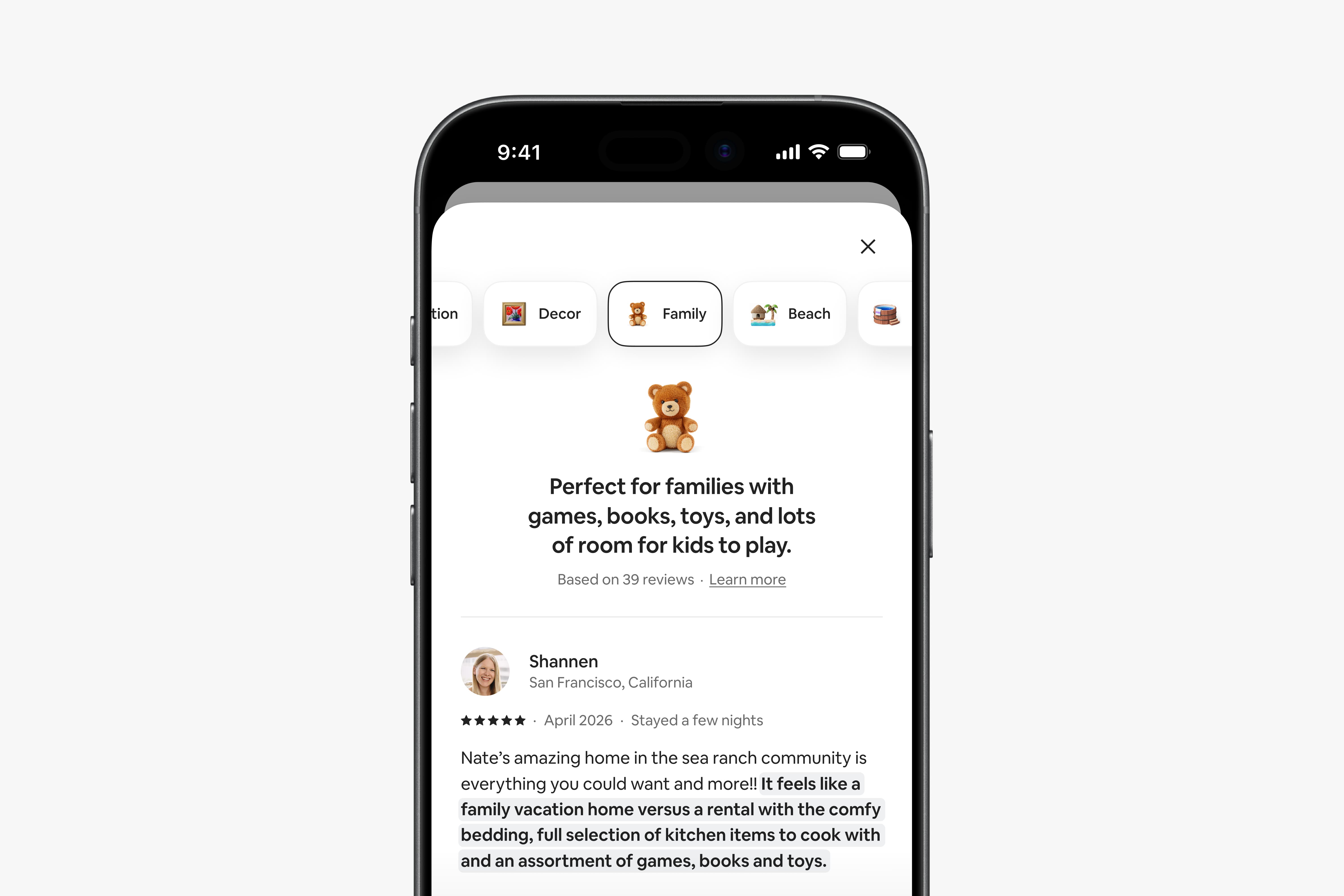
But the biggest change to the guest experience will be the new AI-powered search experience that Airbnb's already begun testing with a small group of users.
Chesky described a search experience that's much more personal than what Airbnb has today.
Guests will be able to describe what they want in normal language, and Airbnb will respond in a more conversational way instead of just showing hundreds of listings. Listing titles and highlights could also be re-created by AI to better match what the guest is searching for, and guests will be able to ask questions about a property right from the listing page.
For hosts, this means that your listing may not look the same to every guest.
Airbnb’s models will decide which parts of your listing, amenities, reviews, and description are most relevant to each guest and show those details first. That means the more complete and accurate your listing is, the more Airbnb’s AI has to work with.
Regular search will still be the default at first, with guests seeing a toggle that lets them try the AI version. Airbnb plans to expand testing throughout this year and into next.
2. Hotels are coming to more Airbnb search results
Regarding Airbnb’s hotel push, Chesky said, “The hotel initiative is going significantly better than I expected, and I had high expectations.”
Hotels still make up only a single-digit share of nights booked on Airbnb, but hotel nights are growing about 3x faster than Airbnb’s homes business.
Airbnb has already added thousands of boutique and independent hotels across more than 20 major cities, but the strategy’s broadening.
Airbnb initially focused heavily on cities where home supply was constrained (primarily due to vacation home rental regulations), but Chesky said the company is now seeing strength in both supply-constrained and non-supply-constrained markets and is focused on adding hotels across “all markets.”
For traditional hosts, this means homes and hotels will compete for more of the same travelers.
But Airbnb believes the new hotel inventory can expand the overall marketplace rather than simply cannibalize demand for homes. The executive team says that about 35% of first-time guests who book a hotel through Airbnb later return and book a home.
3. Pricing may be Airbnb’s biggest growth lever
Reserve Now, Pay Later is already having a real impact. More than 20% of Airbnb’s Q2 gross booking value was booked using RNPL, and Airbnb says the feature drove more bookings, longer booking lead times, and higher ADR.
Airbnb's also continuing its move to a single host service fee, with the full rollout expected to be finished by year end.
But Chesky said pricing may be an even bigger opportunity, calling it “one of the biggest single levers for growth that we have.”
Airbnb’s building a new AI-powered pricing model that can look at Airbnb rates, hotel prices, local events, booking lead times, and other data. Chesky said the impact could be “many multiples bigger than RNPL.”
This is also where Airbnb’s incentives are worth watching.
Mertz said Airbnb wants to make hosts “as price-competitive as possible.” She also said, “In many cases, that means we encourage our hosts to bring their prices down,” while adding that Airbnb also wants to make sure hosts are not leaving money on the table.
For hosts, Airbnb’s goals mostly line up with ours, but not perfectly.
Airbnb benefits from getting more bookings across the platform, and lower prices can help drive more guests to book. But as hosts, our goal is to maximize revenue and profits, which means getting the highest price per night we can without sacrificing too much occupancy.
That’s why I’d be cautious about turning pricing completely over to Airbnb. Their algorithm may be very good, but Airbnb’s optimizing for the performance of its overall marketplace, not the profitability of an individual host’s property.
4. AI is handling more customer service
Nearly 45% of issues that begin with Airbnb’s AI assistant are now resolved without a human agent. The efficiency gains are already showing up financially.
Airbnb’s customer support cost per booking declined approximately 16% year over year in Q2, driven in large part by AI. The company also plans to begin introducing AI voice support later this year.
For hosts, the question is how well AI handles more complex problems involving damage, refunds, cancellations, or guest disputes that tend to need more context and judgment.
We’ll have to see if AI actually makes those situations easier, or simply adds another layer before a host reaches a person.
5. Airbnb wants to own more of the travel journey
Chesky described Airbnb’s next stage as becoming a “one-stop shop for travel.”
Over the next year and a half, he expects travelers to be able to come to Airbnb with a broad request, such as wanting to take their family somewhere in Europe, and have Airbnb suggest where to go and help build the trip.
Homes will remain Airbnb’s core business for the foreseeable future, but the platform around those homes is getting much bigger: hotels are joining search results, services and experiences are being added to trips, AI is changing how guests find and compare properties, and pricing is becoming more automated.
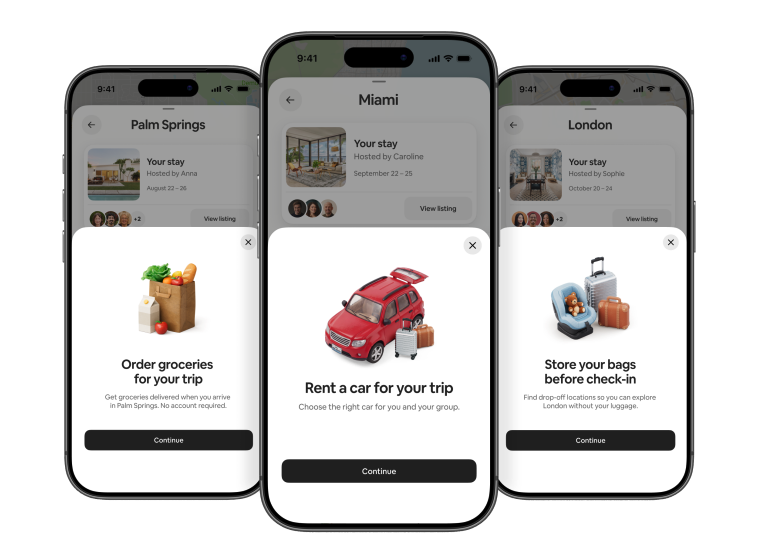
In short, Airbnb’s building to become a place where a traveler can book the entire trip.

.webp)