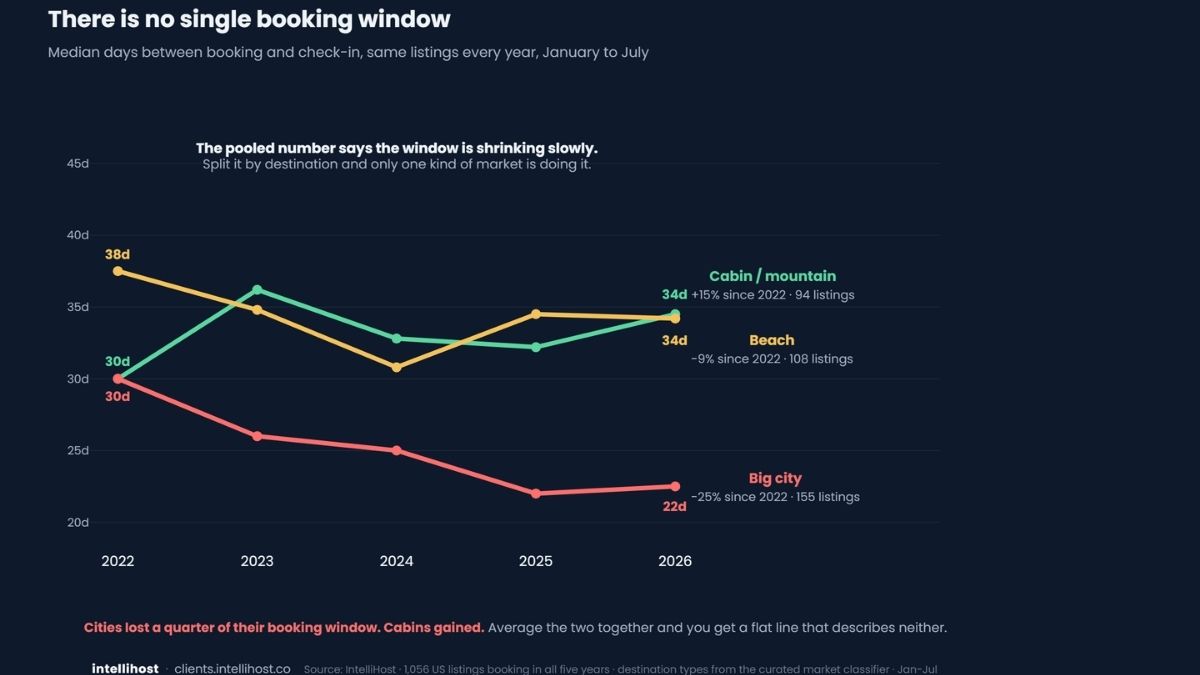
New summer data from KeyData shows that U.S. short-term rental demand is holding up as peak season begins. But for hosts, the bigger story is that the market is splitting in two, and location is the biggest factor.
Premium vacation markets are booking well ahead of last summer, while value-oriented beach and drive-to markets are slowing down.
Where You Operate Is Doing the Heavy Lifting
The high-end markets are strong. Cape Cod RevPAR is pacing 27% ahead of last year, with ADR up 18% and paid occupancy up 7%. Ocean City RevPAR is up 30%. San Diego RevPAR is up 21%, helped by a 14% jump in occupancy. Jackson Hole RevPAR is up 19% as occupancy climbs 12%.
The value markets tell a different story. Myrtle Beach RevPAR is running 8% below last year, even though ADR is up 13%. Charleston occupancy is down 8%, despite a 7% rate increase. The North Georgia Mountains are flat, with occupancy down 1%.
Premium destinations seem to be benefiting from higher-income travelers who remain willing to spend, while more budget-conscious consumers are pulling back in some lower-cost markets.
Other Recent Demand Data
This looks different from a joint Hospitable and IntelliHost report published last week, which showed summer demand cooling across a wider group of listings. VRBO searches for July were down 45% from last year. Actual occupancy was tracking 43% to 50%, below the 56% to 60% hosts expected.
Both can be true. KeyData only counts professionally managed properties, and its numbers are early pacing figures as of May 12th. Professionally run homes in premium markets may just be holding up better than everyone else. The two reports are measuring different parts of the same season.
What to Watch From Here
KeyData’s calling summer demand resilient, but that word describes the market as a whole. The overall average hides how differently the two types of markets are doing.
The clearest divide is between premium destinations, which are pacing ahead on both rates and occupancy, and value markets, where occupancy is sliding even as rates climb. Whether the gap between premium and value markets widens or narrows as the season fills in is the thing to watch.

.webp)
.jpg)