Brian Chesky walked on stage in San Francisco on May 20th and announced 220 new features and upgrades to Airbnb. Most of the headlines this week will cover the new services, the World Cup tie-ins, and boutique hotels coming to the platform.
The bigger story for hosts is sitting in the middle of the presentation. Airbnb’s putting an AI layer between every listing and every guest. Airbnb’s algorithms now decide what guests see and which reviews they read when viewing a host’s listing. Along with a change to house rules that affects damage claims, the release shifts how much control hosts have over their own listings.
This is a comprehensive breakdown of what was announced, and what hosts should pay attention to.
Smart Setup: Lowering the Barrier to Hosting
Smart Setup is Airbnb's new AI-powered listing creation flow. It takes a nine-step process down to one step. Now, a new host simply enters an address, and the platform generates the listing: amenities, neighborhood description, and suggested titles. The host reviews, adjusts, and approves. That's it.
The context Chesky gave is important. Airbnb now has 5.5 million hosts. 87% of them run just one or two listings. Chesky said 50% rely on Airbnb income to make ends meet. Gen Z is the fastest-growing host segment, up 18% year over year. Smart Setup is built for that audience, professional operators with established processes will probably skip it.
For existing hosts, this means the edge from a more polished listing will shrink over time. Differentiation moves from crafting a great listing to the things AI can't generate: the underlying property, location, and review history.
AI Listing Highlights and Review Highlights
Until now, every guest looking at a listing saw the same hero amenities and the same top reviews. Starting this summer, Airbnb personalizes both per guest.
A guest searching for a beach property might see "beachfront on the Sea Ranch coast" as the top highlight. A guest searching for a family trip sees "family-friendly amenities, highly rated for families." A guest planning a multi-week stay sees "secluded oceanside workspace, a remote work retreat guests return to." Same listing, different surface.
Review highlights work the same way. Airbnb's AI models read across what Chesky called the one billion total reviews on the platform, and surface the specific review that matches each guest's interest. If a guest cares about location, the system pulls out location reviews. If they care about a well-stocked kitchen, kitchen reviews come up.
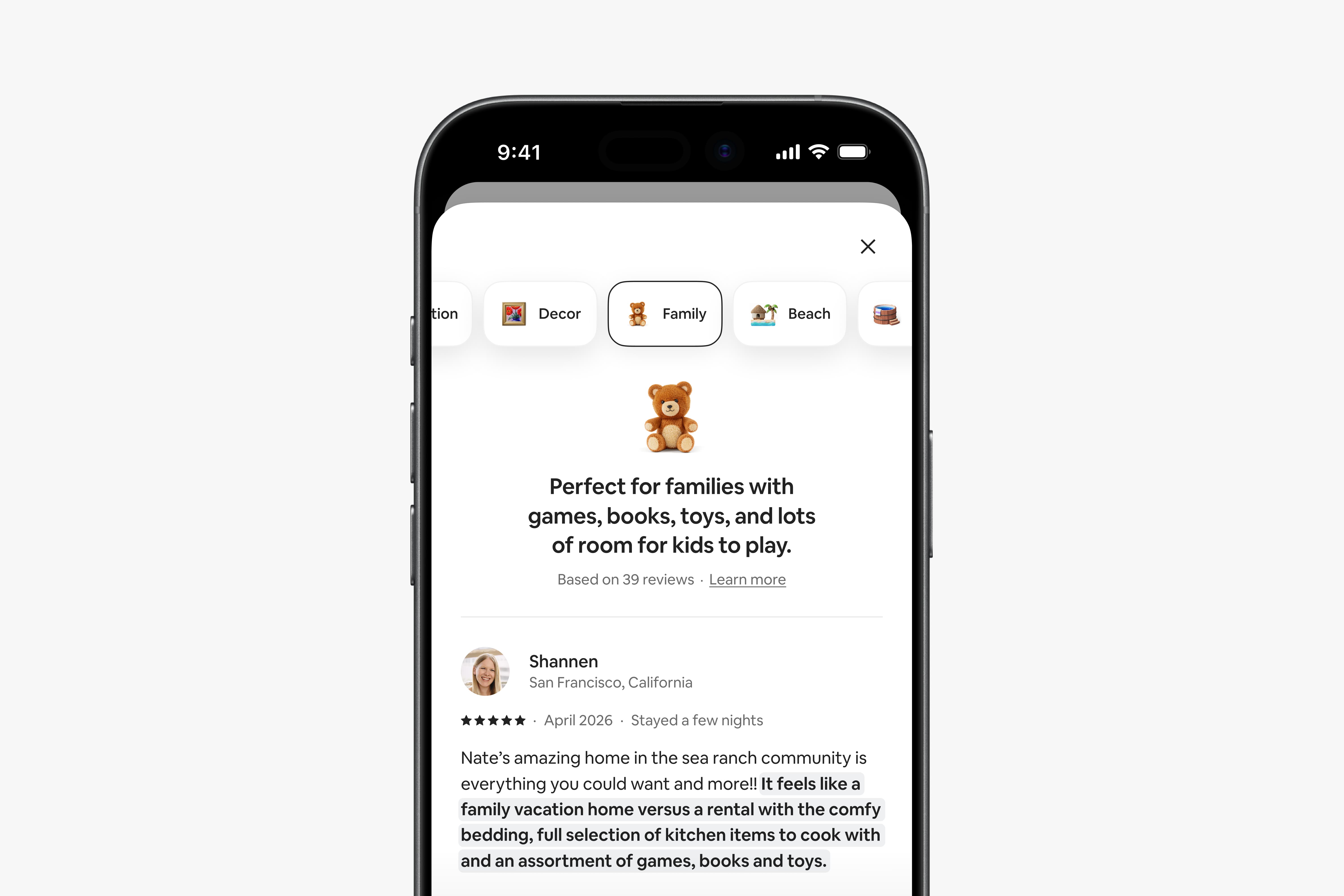
For hosts, this means you no longer control what your listing surfaces. The same property displays differently to a beach traveler, a family, and a remote worker. The AI works from your photos, listing description, amenity inputs, and reviews. Amenity accuracy and review quality matter more than ever now. They’re the raw material the system is reading.
Ask About This Home and AI Comparison
Airbnb added a guest-facing AI Q&A on each listing called Ask About This Home. A guest can type a question ("is this family-friendly?", "is there a fireplace?", "is this near a hiking trail?") and the system answers by scanning listing details, photos, and outside context like maps. Chesky's demo showed it pulling up fireplace photos even when the listing description didn't mention a fireplace.
AI Comparison ships later this year. Guests can pin a favorite listing and compare others against it side by side, with AI-written summaries of architecture, location, and amenities. It pulls the same AI personalization into the wishlist.
House Rules
This change got the least stage time but will likely have a big downstream impact for hosts. Hosts can now only choose from a standard menu of house rules. The three Chesky mentioned were quiet hours, smoking, and pets. Any “custom” house rule outside that menu will require Airbnb's approval.
This matters because Airbnb's own Host Damage Protection Terms state that "Violations of house rules are relevant to determining eligibility" for AirCover. The terms use an example of damage from a pet at the property in violation of a host's house rules being covered. House rules are referenced directly in the document that governs damage payouts.
If a custom house rule isn't approved by Airbnb, hosts lose their written reference point when a related damage claim hits the Resolution Center. That's not the same as an automatic claim denial, but it shrinks the paper trail hosts have used in the past. In our AirCover guide we wrote that house rules are "your reference point in disputes." That advice still applies, but house rules now run through Airbnb's approval process.
Services, Hotels, and Experiences Updates
The rest of the release pushes Airbnb further into the role we've written about before. The platform wants to be the one-stop shop for the entire trip, not just the stay.
Services
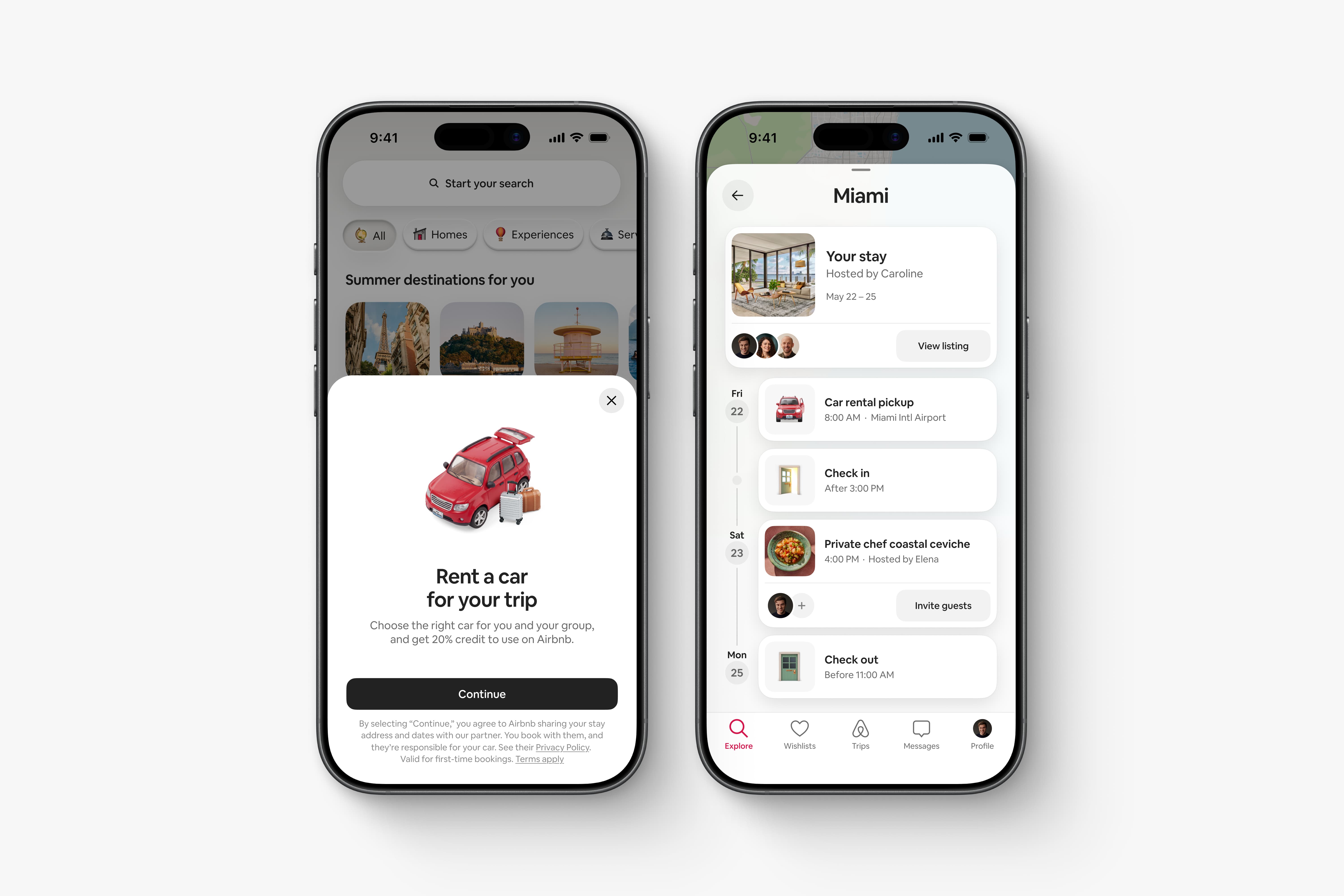
Airbnb added four new service categories that guests can book in the app. Grocery delivery through Instacart launches in over 25 US cities with $0 delivery fees and $10 off orders of $50 or more. In select cities, hosts can pre-stock the home before guests arrive.
Airport pickups expands to over 160 cities, with drivers tracking flights and meeting guests curbside at 20% off every ride.
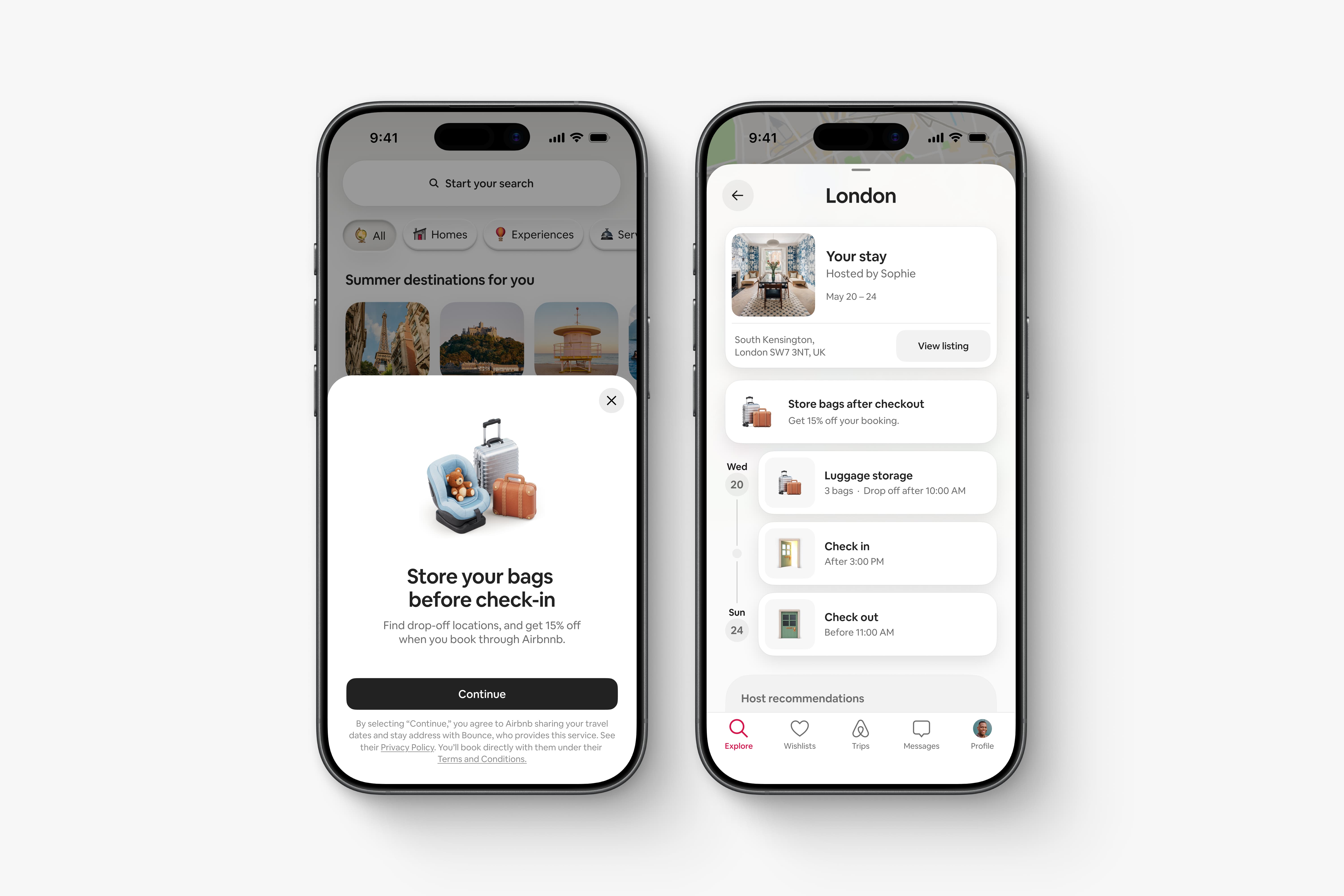
Luggage storage through Bounce opens 15,000 drop-off locations across 175 cities at roughly $20 a bag, with a 15% discount for Airbnb guests. Chesky noted that's nearly as many luggage drop-offs as there are Starbucks in the world.
Car rentals launch in 50 US cities next month, with 20% credit back on a guest's first rental. Day passes at local gyms and at-home pet services were teased for later in 2026.
Hotels
Airbnb is bringing boutique and independent hotels to the platform in 20 destinations at launch including New York, Paris, London, Madrid, Rome, Singapore. Featured hotels carry a price match guarantee with up to $400 in Airbnb credit, plus 15% Airbnb credit on the booking, up to $2,000.
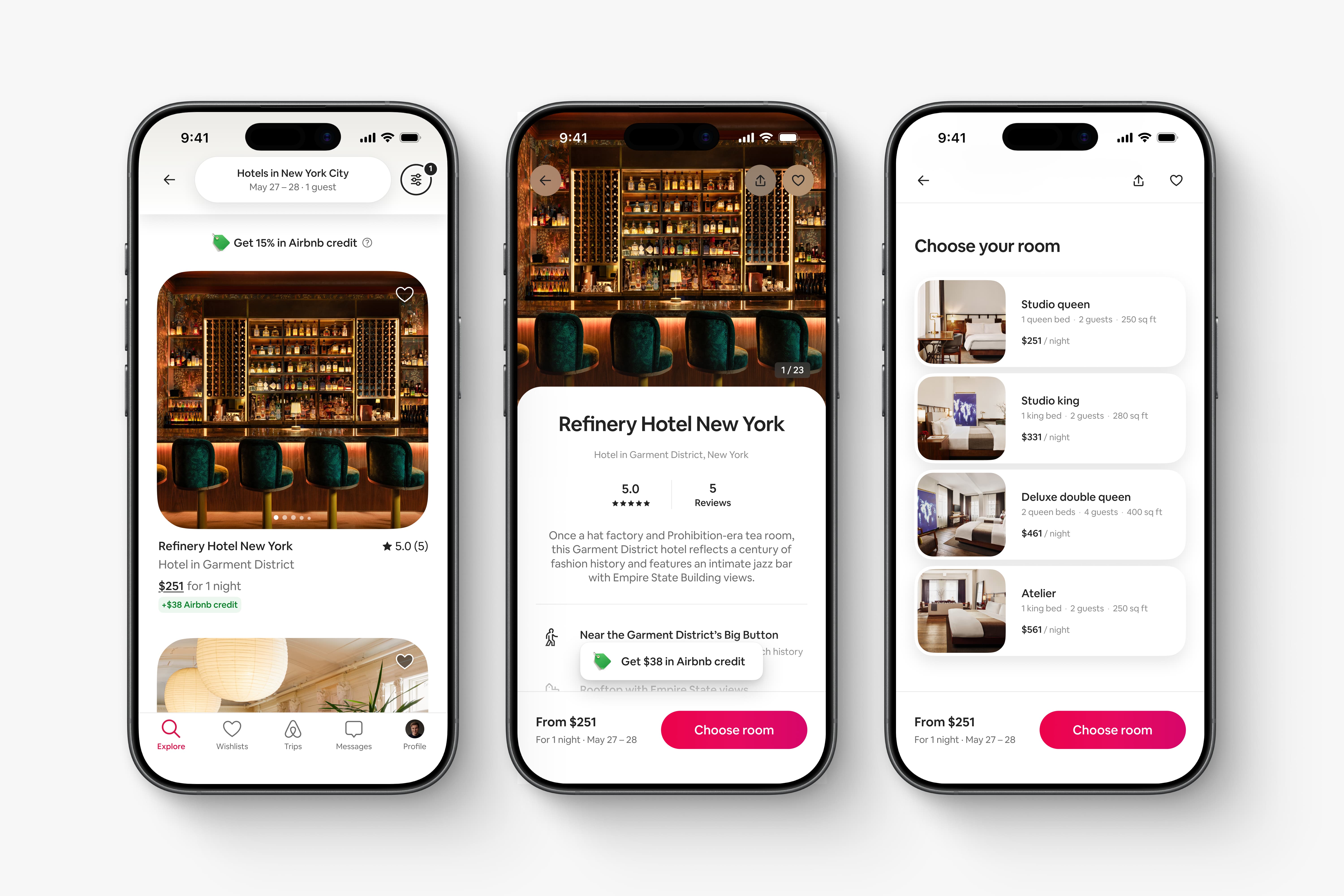
The host concern is obvious. Hotels in search results compete with homes. Chesky offered a counter data point. He said 55% of guests who book a hotel on Airbnb come back to book a home. It's a nice marketing line. The question is whether those guests are net new to Airbnb, or whether they would have booked a home anyway. Airbnb's take is that hotels fill demand homes weren't going to capture: last-minute stays, one-night business trips, and sold-out periods in big cities.
Experiences
Airbnb added more than 3,000 landmark experiences (Tower of London, Tokyo Skytree, Taj Mahal) and over 2,500 food culture experiences, with partnerships including Chef's Table and Grand Central Market. Chesky's pitch: 75% of travelers visit a landmark on a trip to a new city.
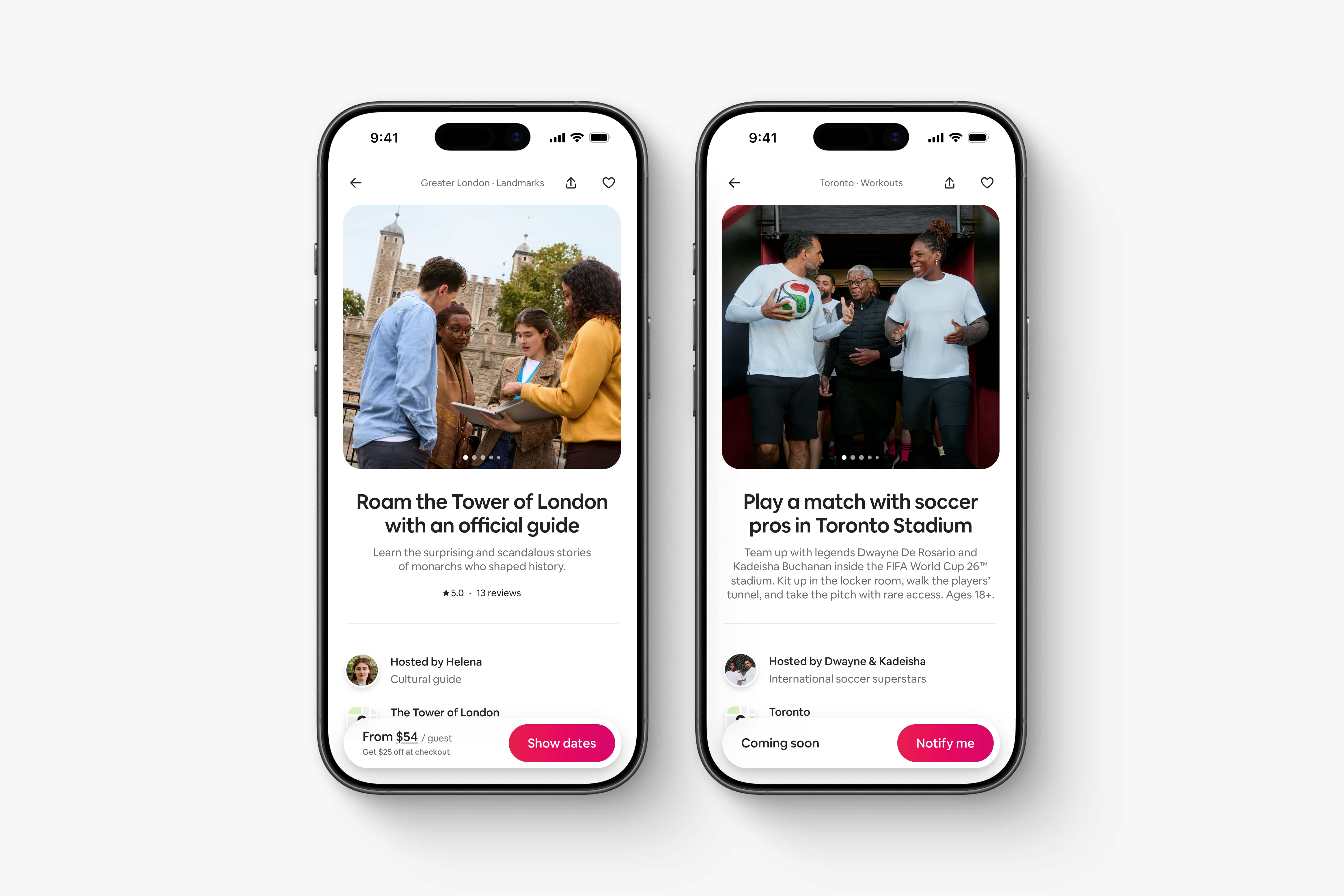
The bigger event tie-in is the World Cup. Airbnb is offering 70 exclusive experiences across the six US host cities, including training sessions with players and watch parties with World Cup champions. For hosts in those cities, this stacks on top of the booking demand we've already covered. Chesky cited 200,000 stays during the Milan and Cortina Winter Olympics as proof that event-based supply works for Airbnb.
These three pieces fit a direction Airbnb has been moving in for a while. The platform wants to own arrival, the stay, and everything around it. As we've written before, Airbnb is positioning itself as the one-stop shop for the whole trip.
What This Means for Your Listing
The 220 new features can be grouped into two stories. Airbnb is inserting AI between hosts and guests at every point on the listing surface, from creation to search to dispute resolution. And Airbnb is closing the trip loop with services, hotels, and experiences.
For hosts, two practical things stand out from this release. First, photos and amenity inputs are now AI training data. Keep them accurate and detailed, because the AI will surface based on what's in the listing, not what hosts wish was there. Second, anything that would have gone into a custom house rule is worth submitting for approval. The AirCover terms still reference house rules as relevant to eligibility, and the standard menu is narrower than what most hosts use today.
The deeper question is whether AI-personalized highlights help guests book the right home, or just the most algorithm-friendly one. Hosts will see the answer in their conversion rates over the next two quarters.

.webp)