I heard a story this week that caught my attention, and it’s worth passing along:
A guest booked the property for $380/night.
Nine days before check-in, the guest canceled.
Almost immediately, the same dates got booked again for $295/night.
At first, the host thought they’d lost one guest and picked up another.
Nope. It was the same person.
The guest canceled the original reservation, and rebooked the exact same stay for less.
How it happened
According to the host, the listing was on a Moderate cancellation policy, which gives guests a full refund up to 5 days before check-in. The host also had last-minute discounts running for bookings made within 10 days of check-in.
That created a 5 day window where the guest could still cancel for free, and those exact same dates were now available at a lower “last-minute” rate.
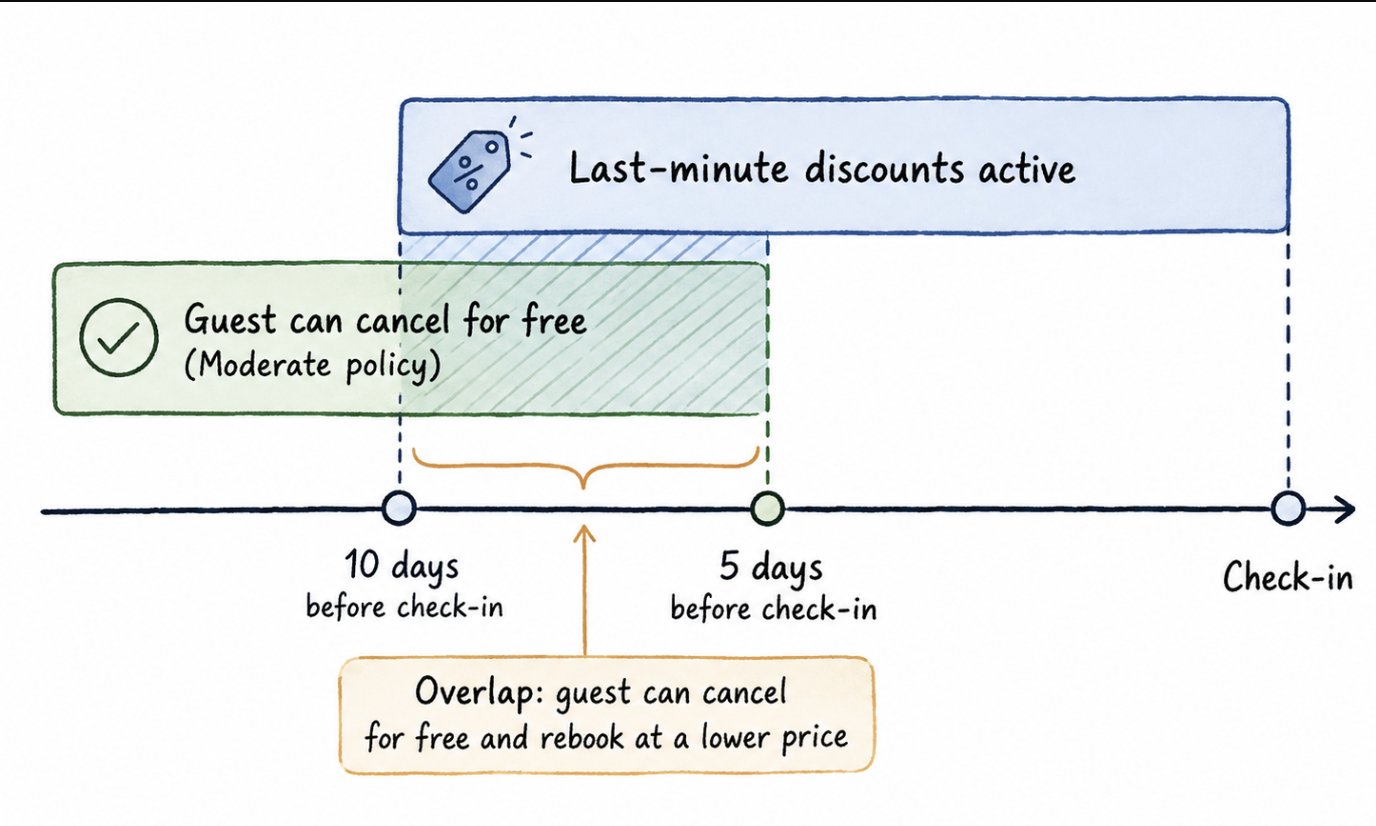
The guest noticed, so they canceled, rebooked, and saved a few hundred dollars.
When your settings work against each other
This is the part I find interesting.
Two normal settings can overlap and create a bad incentive:
- A more flexible cancellation policy can help attract more bookings.
- A last-minute discount can help fill open nights as they get closer.
But together, they created a pricing loophole.
It wasn't something Airbnb was advertising to the guest. There wasn’t a notification saying, Hey, your trip is cheaper now. The guest had to notice the opportunity themselves, and that takes a pretty savvy traveler.
And that may seem like a one-off. But strategies like this have a way of spreading.
One person figures something out. It gets posted on Reddit and TikTok. Someone else tries it. And suddenly a lot more people are trying to take advantage of the loophole.
Why it’s worth paying attention to
Hosts are usually managing several new pricing and booking settings at the same time (discounts, promotions, dynamic pricing strategies, cancellation policies, etc.). Each one can make sense individually.
The important part is understanding how all these settings work together.
One story isn't a reason to change your cancellation policy or stop offering last-minute discounts... But it is a reason to check.
Because if that loophole exists, you have to assume a guest will eventually find it.
Further reading