It’s shoulder season. A few gaps appear on the calendar and the instinct is to drop the rate and see what happens. Airbnb’s recent test encouraging hosts to offer discounts in exchange for more visibility has sparked debate, but the mechanics are not the real story. The more uncomfortable question is who controls your visibility and what that does to your pricing power.
Most professional operators rely on OTAs because they are very good at capturing demand and converting it. That is not in question. What is easier to overlook is that visibility inside a marketplace is not something you own. It is access you are granted, based on signals the platform chooses to prioritize.
Where you show up in search results shifts constantly. A wave of new supply enters your market and you move three rows down, or a small dip in conversion pushes you off page one. If most of your growth happens inside that system, you are operating inside someone else’s allocation model. As competition increases, that dependency becomes harder to ignore. And when the allocation rules shift, so does your performance.
Visibility is allocated, not guaranteed
Online marketplaces bring travelers into one place and make comparison easy. That is their strength, but visibility inside that environment is limited. When one listing rises, another drops. As inventory grows, exposure becomes tighter and more conditional. That is simply how marketplaces function.
Guests scrolling through search results are not evaluating your operations or your hospitality standards. They are scanning total price, photos, reviews, and cancellation terms in seconds. Default sort often prioritizes the lowest price or best value, reinforcing that behavior. That is the decision window. Everything else becomes secondary.
If visibility starts to favor discounted listings, price stops being just a conversion tool and starts determining where you appear in the first place. At that point, pricing is no longer just about filling nights. It becomes the price of access.
When price becomes the shortcut
There is a difference between choosing to run a targeted ad and lowering rates to influence where you're showing up in the search line-up. In your own campaigns, you control timing, budget, audience, and which properties need support. That is strategic.
Adjusting price to improve rank is reactive. You are protecting placement inside a system designed to optimize for conversion at scale, not for your margin.
Under occupancy pressure, the pattern becomes predictable: adjust price, try to move up, protect bookings. But if you reduce ADR by 10% to gain visibility, how many additional nights do you need to sell just to break even? If you are splitting revenue with an owner, how much of that discount are you absorbing?
Cleaning costs, staffing, and overhead do not shrink because ADR does. The margin absorbs the impact. Repeated discounting does not just affect one month; it resets your RevPAR baseline and shapes owner confidence over time.
Discounting can create short-term movement, but small price shifts rarely create new demand — they redistribute it. You may move up the page and gain share from a competitor, but the total demand pool has not grown. When exposure becomes conditional on price, average inventory begins to compete in narrower ways, compressing margin without expanding opportunity.
Why mid-market portfolios feel it first
Luxury and recognized brands often generate demand before a guest opens a marketplace because travelers search for them directly.
Mid-market listings compete differently. Many operators manage similar unit types in the same destinations. In the OTA grid, those differences compress into thumbnails and price tags, and when filters prioritize price and high review volume, anchoring becomes stronger.
A small rate change can influence clicks, clicks influence ranking, and ranking influences bookings. Guests get used to the lower price they see most often, and that becomes their expectation. It becomes easy to chase small week-to-week improvements that slowly lower what you expect to earn. Once owners adjust to that lower baseline, reversing it becomes difficult. And if revenue expectations are not met, inventory eventually moves.
This is not about criticizing platforms, but about recognizing the structure you are operating inside. If price becomes your first and last lever, you are playing a narrow game.
Competing for placement versus creating demand
Operators who take a longer-term view think earlier in the demand journey. Instead of asking how to rank higher, they focus on where demand is being created and how to influence it before a traveler enters a marketplace search.
Sometimes what looks like a demand problem is a presentation problem: photos that do not sell the experience, amenities that are not clearly positioned, or a listing that blends into the grid. A discount will not fix that. Other times, it is a genuine demand gap, but that does not automatically mean price is the answer.
If one property has a $6,000 revenue opportunity in the next 45 days and another is pacing fine, treating them the same makes little sense. Effort should follow real revenue opportunity, guided by disciplined pacing reviews and clear visibility across the portfolio.
That might mean retargeting past guests for specific properties, running paid campaigns only where real upside exists, or segmenting outreach instead of pushing blanket promotions across an entire portfolio.
Marketplace visibility should be one channel, not the entire engine. When every soft period triggers the same sequence of rate cuts and fee pressure, dependency deepens. Owning demand does not mean abandoning marketplaces. It means building enough demand outside of them so you are not forced to trade margin for placement every time conditions tighten.
The signal behind the noise
Airbnb’s test is a reminder that our position in search can change at any time. The more control you have over your demand, the more control you have over your pricing. If most of your demand depends on algorithmic allocation, your pricing power depends on it too.
Operators who influence demand before it hits the grid protect margin, prioritize inventory deliberately, and avoid reactive discounting simply to maintain exposure.
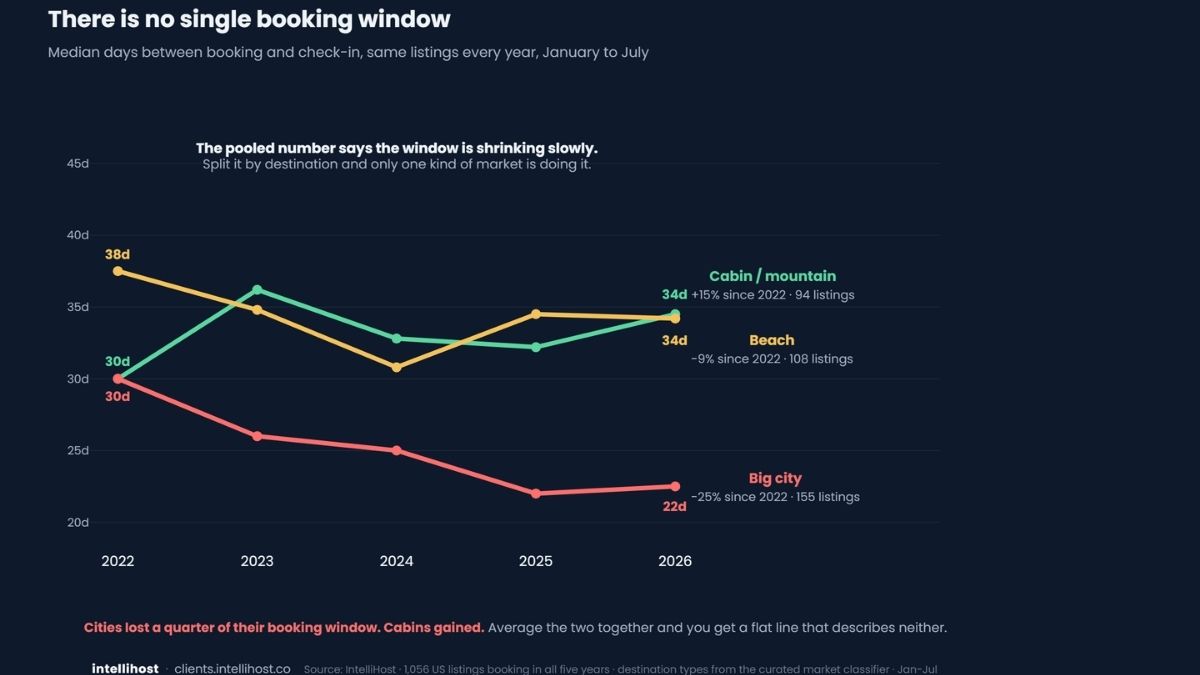
In a market where supply keeps expanding and booking windows shrink, that flexibility becomes leverage and over time, that is what separates healthy portfolios from the rest.
When you own demand, you own the outcome.

.webp)

.jpg)