Quick background:
In July 2025, ChatGPT rolled out an "agent" feature that could browse travel sites, compare options, and help plan itineraries on your behalf. It could even pre-fill forms in some cases, but the actual booking still happened on the underlying OTA or direct booking website.
Then, in October 2025, ChatGPT rolled out "apps" that let users search, plan, and actually book travel directly inside ChatGPT, pulling live prices and availability from Booking and Expedia without leaving the chat window.
And at the end of 2025, they added Instant Checkout, which let ChatGPT users actually pay for things inside the chat.
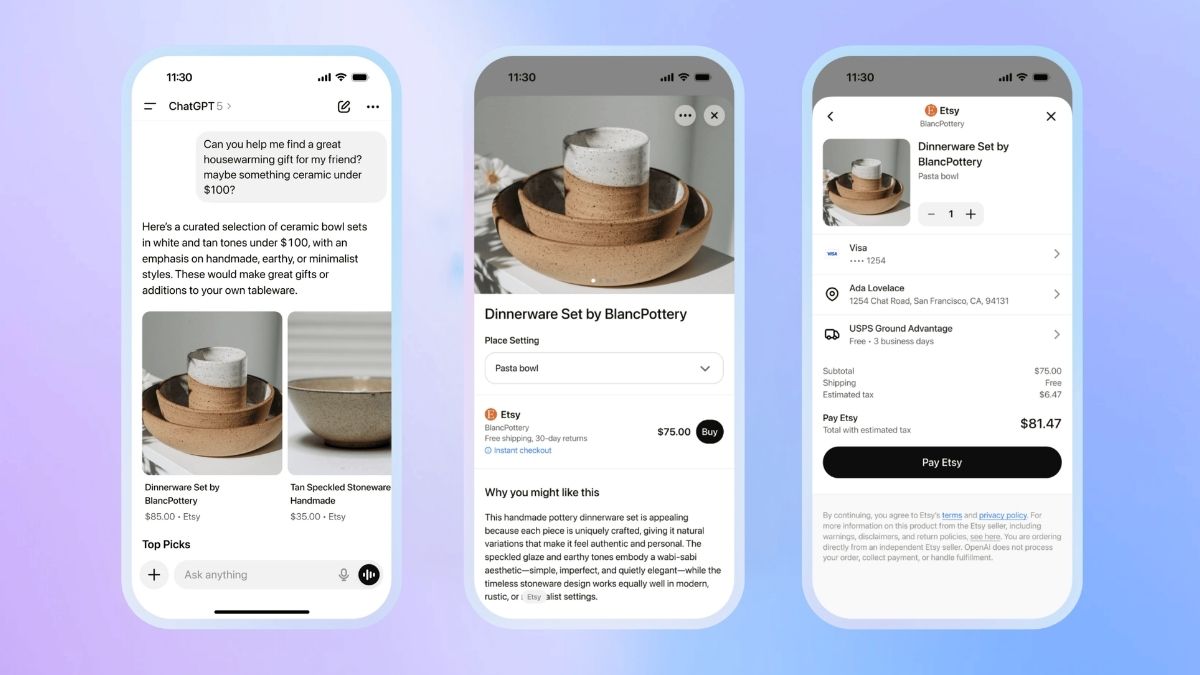
But this month, they backed off (for now, at least) and they decided to stop trying to have the AI do the final payment/checkout for booking hotels & vacation rentals.
ChatGPT cited low conversion on direct in-chat travel bookings, along with the complexity of payments, cancellations, and customer service liability in travel.
Basically, ChatGPT just found out that travel is messy. And that there’s a lot of trust built into hospitality that can’t be replicated inside a chat window. Honestly, they could have saved themselves a year of heartache by asking anyone reading this with real boots on the ground… We could have told them that 😉
So what’s interesting about this?
What stands out to me here is that AI is mainly being used by travelers to plan trips and discover new places to stay. It’s really good at helping people find new options and compare listings. But there is still a big gap between discovering a place and actually booking it.
That feels intuitive to me. I’ll absolutely use AI to help me browse ideas, narrow things down based on what I’m looking for, and put together a travel itinerary. But I still don’t trust it enough to go fully hands off, give it my credit card details, and let it book the stay for me. Not yet.
And inside that gap is where OTAs still sit. Airbnb, Vrbo, and Booking still own the layer travelers trust when it’s time to actually pull out a credit card and pay for something. That matters because the transaction layer is where the money is made.
So the current dynamic looks something like this: people browse inside AI, but they still buy through brands they trust. And, at least for now, the booking still belongs to whoever has built that trust and has a relationship with the traveler.
Why this matters for vacation rental operators
I don’t think OTAs will be able to sit in that middleman position forever.
Give it enough time, and I think ChatGPT, or whatever comes next, will get much better at sending people directly to the place they want to stay. If that happens, it starts to weaken the OTA’s grip on discovery and booking for our listings.
And that’s the part worth paying attention to.
Because as AI keeps getting more popular as a place travelers plan their trip and discover cool places to stay, operators need to make sure their direct booking sites are actually visible to it. You want the AI to find your site. You want it to understand your listing data. And you want that data to be clean and structured so the AI can recommend it to travelers.
But what ChatGPT seems to have learned the hard way is that travel decisions are not just a bunch of data points. There’s a trust layer here that AI cannot fully replicate inside a chat window.
So that means the old fundamentals still matter: strong branding, positive guest reviews, and a clear reason for why a guest should book direct.
The easier you make it for AI to find your listing, and the more trust signals you can share with the guest, the better positioned you’ll be if AI becomes the main way that guests search for a place to stay.