Last week, President Trump made headlines floating two major housing policy ideas: banning institutional investors from buying single-family homes, and directing the purchase of $200 billion in mortgage-backed securities.
Ban on institutional investors
Trump floated a ban on "large institutional investors" purchasing single-family homes. Who exactly would this ban apply to?
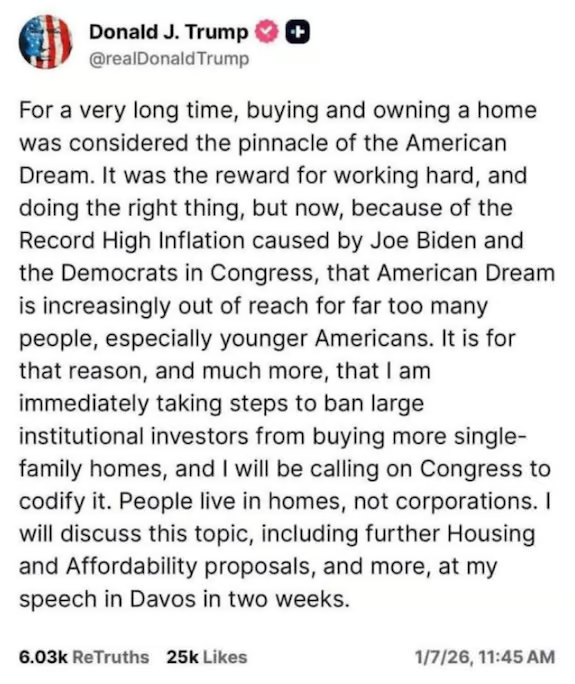
We don't know the specifics. Trump said "institutional investors," which is traditionally defined as groups with 1,000+ homes.
Others have used the word "corporations," which is a very broad term that could be defined as investors who use LLCs for liability protection. Obviously, that would affect the majority of vacation rental operators, but that broad of a definition does not seem likely. Most of the policy rhetoric is aimed at "large institutional" players, not individual investors and partnerships.
That means this proposal would likely not affect vacation rentalinvestors unless you own or control hundreds of homes.
The real risk for vacation rental investors
The real risk here is a downstream effect: additional regulation. The energy created by politicians targeting "Wall Street landlords" can easily be redirected toward "Airbnb investors" at the local level as the affordability scapegoats.
If the narrative across the country becomes "investors vs. families," local governments may feel justified to further restrict STRs under the banner of "housing affordability" (even though there's plenty of evidence showing Vacation Rentals do not impact housing affordability).
This framing is already a common justification used by cities to restrict or ban STRs today, and this political rhetoric could add fuel to that fire.
$200 billion purchase of mortgage-backed securities
Trump also sent a social media post stating that the GSEs (Fannie Mae and Freddie Mac) would purchase $200 billion of agency mortgage-backed securities to push mortgage rates lower and improve housing affordability.
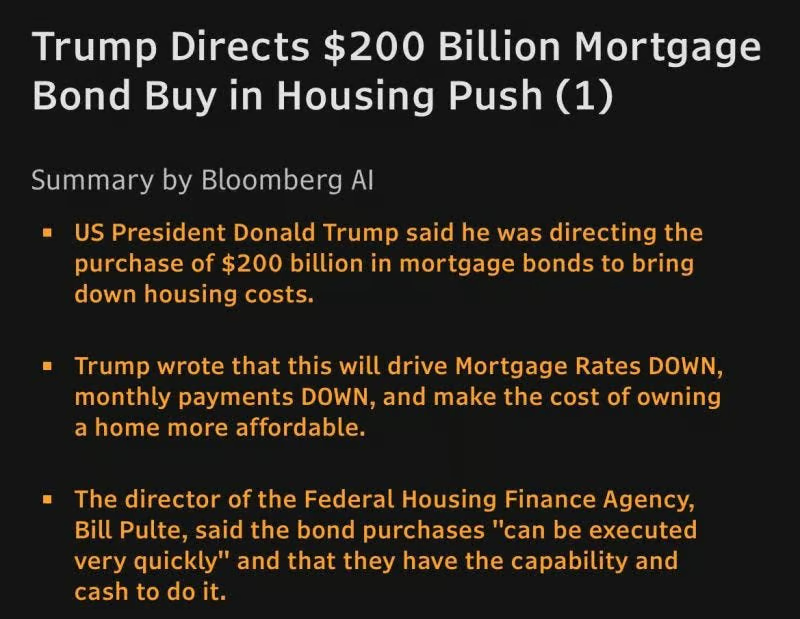
Quick background: when large volumes of MBS are purchased, mortgage rates typically fall (all else equal). This is the same mechanism used during the 2008 housing crisis and again in 2020 during the pandemic.
Immediately after the post, mortgage rates priced in the news and had a significant drop where rates briefly fell below 6%.
In the short term, the expectations are this could lower mortgage rates by roughly 0.25% - 1.0%. But this policy alone is not going to return mortgage rates anywhere near pandemic-era 3% levels.
The longer-term effects are far less certain. Investors may grow cautious if they believe the government is willing to repeatedly use the GSEs as a policy tool, which could introduce new risk premiums over time.
But for vacation rental investors, if you plan to grow your portfolio in 2026 - it does look like you'll get a better mortgage rate than you would've gotten in 2025.