Airbnb went on a high-profile hotel executive hiring spree last week. And STR hosts should be paying attention.
Jesse Stein is now Airbnb's "head of hotels." He announced the role on LinkedIn saying "Expanding and optimizing the hotel experience on Airbnb is a key growth lever, and one I'm especially excited to help lead." Before Airbnb, Stein spent five years at KHP Capital Partners and held development positions at Wyndham Hotel Group and Kimpton Hotels.
Lou Zameryka joined as global head of hotel enterprise and connectivity partnerships. Zameryka was among Booking.com's first hires in North America and spent nearly two decades there as director of global accounts.
Jim Alderman, former CEO of Radisson Hotel Group Americas, joined Airbnb back in June 2024 in a business development role but was recently added to the Hotels team. Alderman also previously served as chief development officer at Extended Stay America and Kimpton Hotels.
That's a lot of talent on one team. And it signals how seriously Airbnb is taking this hotel push.
Why Airbnb is Moving in This Direction
Here's the thing: Airbnb is a public company that's accountable to shareholders. And the numbers aren't pretty.
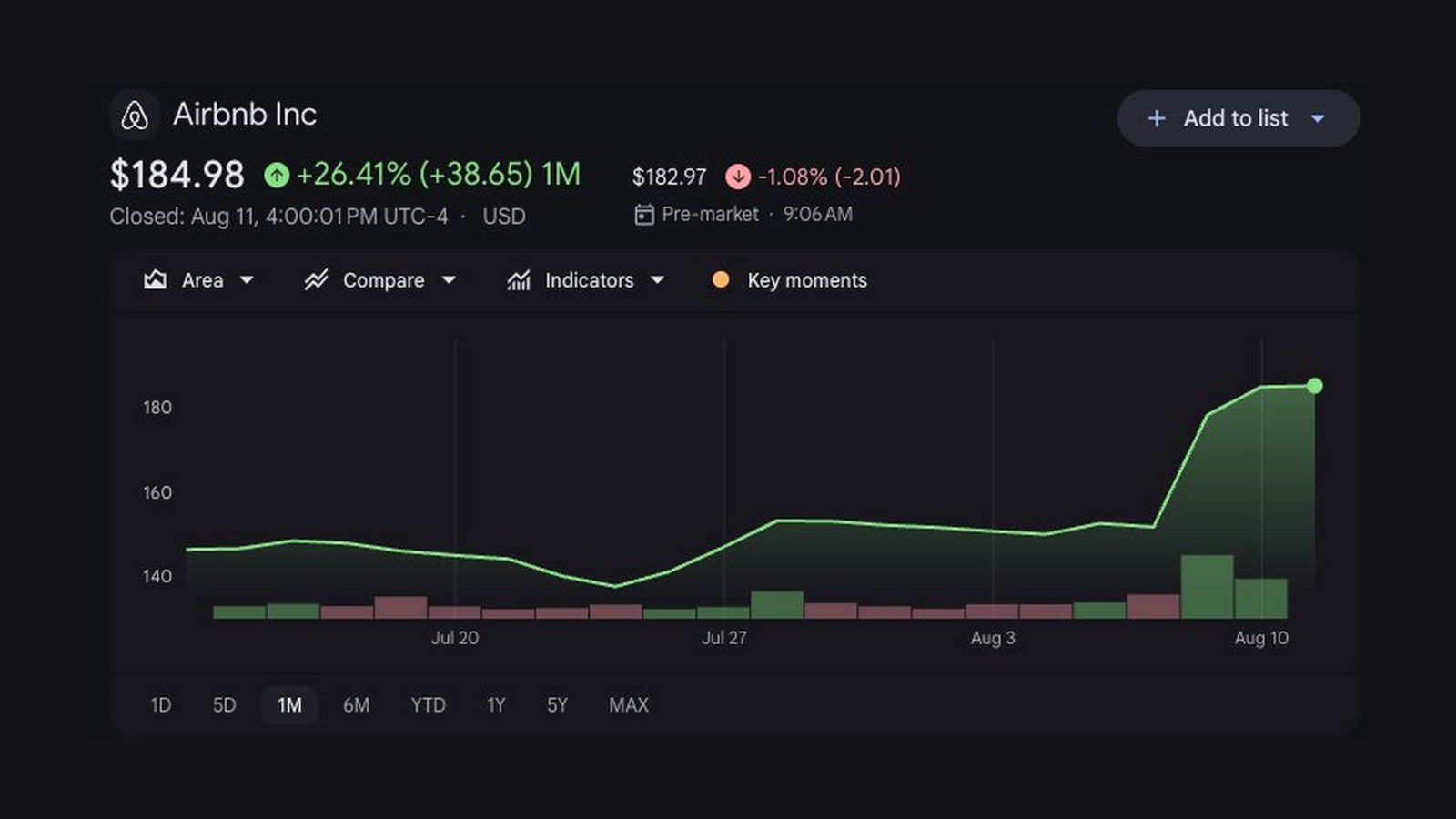
Airbnb's stock is negative since its IPO. Over the same ~5 years, the other major OTAs (Expedia and Booking) and major hotel brands (Hilton, Marriott, Hyatt, IHG) have soared.

That performance gap explains why hosts are experiencing whiplash from all the recent changes: A completely overhauled guest communication policy, an all new app design + introducing Airbnb Services and Experiences, eliminating "strict" cancellation policies, introducing "Reserve Now, Pay Later", shifting to the "Host-Only Fee" structure, and adding hotels to the platform.
Airbnb's executive team is under immense pressure from investors to stop selling "the vision" and deliver results. Some would call these changes desperate. Others would say it's a natural evolution for a public company.
Either way, the poor stock performance requires Airbnb to find new areas to grow.
One way to grow is to sell more stuff within the STR market. Hence the re-launch of "Experiences" and the new "Services" business. But will those actually catch on with customers and drive meaningful revenue? Nobody really knows, but the initial results don't appear great.
The other way to grow? Expand into new markets. So if you're an Airbnb exec looking for a virtually guaranteed way to grow, one thing's for sure: There are a lot of hotels out there.
Airbnb says they're only adding boutique and independent hotels to the platform, not the large branded chains. But the need to keep growing never stops for a public company. It's only a matter of time before the requirement to expand pushes Airbnb into traditional hotels as well.
Bottom line: Expanding into hotels is good for Airbnb's stock price. I don't think it'll be good for STR hosts.
What's Next for Hosts?
STR hosts are wondering what this means for them. Here's my take:
In the immediate future, hosts won't feel much difference. Adding hotels to the platform isn't a light switch you can just flip. It's a massive operational change, and it'll take years for the full effects to play out.
But the writing's on the wall. Hotels are the direction Airbnb is headed.
Let's bring this back to basics: The whole value proposition of listing on any OTA is that the platform (Airbnb, Vrbo, Booking) does marketing and distribution for your listing. That's why hosts pay Airbnb a 15% fee. The platform delivers guests to you, and for providing that revenue, they justify taking a large percentage of the booking value.
But here's the problem:
What happens when Airbnb starts prioritizing hotel inventory in search results and ads? There are only 20 listings on page 1. When 5 of those become hotels, that's 25% fewer STRs getting visibility.
And what about basic supply and demand? If Airbnb adds 1,000 units of hotel supply in a particular city, all else equal, that increase in supply means less demand for existing STRs on the platform.
So what's the path forward?
Just like how it's logical from a numbers standpoint for Airbnb to expand into hotels, it's also logical for STR hosts to diversify where they list their properties and receive their bookings. The hosts with the most risk are the ones relying on Airbnb to deliver 100% of their traffic.
I'm not saying take your listing off Airbnb. But the more traffic you own (meaning you can generate yourself without relying on an OTA), and the more sources you have supplying your traffic, the safer you'll be.
Maybe that's why we saw a 91% increase in direct bookings last year.
And according to Hospitable's 2026 Industry Report, hosts ranked increasing direct bookings as their #1 priority for 2026.
None of this changes the fundamentals of day-to-day hosting. But to avoid being the frog in boiling water, it's worth considering: Where are your bookings coming from? And how sustainable is that traffic source?